Before you start
Copán lies in a green river valley in western Honduras, close to the border with Guatemala, about a kilometre from the small town of Copán Ruinas. It was one of the great cities of the Classic Maya, famous above all for its sculpture: tall carved stelae, altars and a stairway covered in hieroglyphs. The site was inscribed as a UNESCO World Heritage Site in 1980. This guide follows the main paths from the entrance through the Great Plaza and the ball court to the Hieroglyphic Stairway, then climbs into the Acropolis, the royal heart of the city, and ends at the Sculpture Museum. The ground is mostly flat, with some steep steps in the Acropolis. Allow at least three hours, and more if you visit the tunnels or the museum.
Use it as a self-guided tour of Copán: 8 stops in visit order, each played when you’re ready, at your own pace.
 Free preview · Stop 1
The Entrance Path
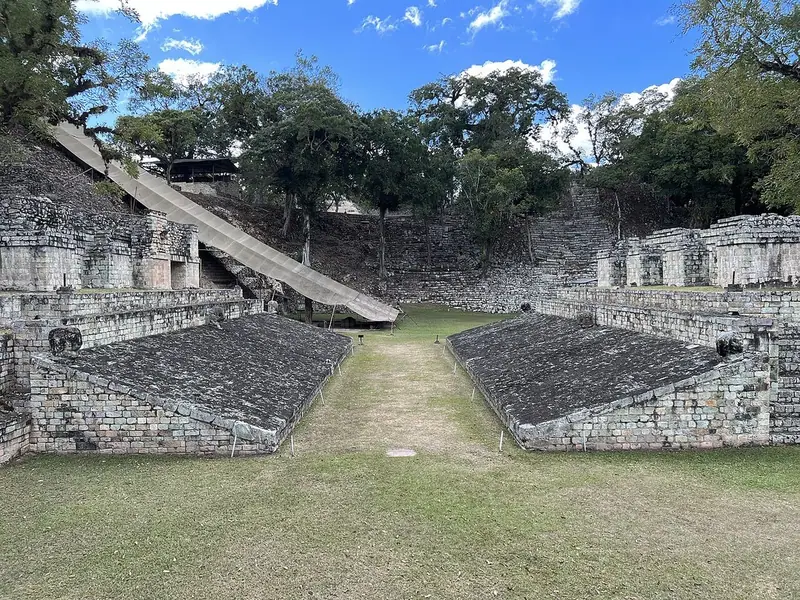
Begin on the path from the visitor centre, which leads through shady trees towards the ruins. Listen and look up, for you may well see scarlet macaws, large red, yellow and blue parrots, which live around the site. The macaw was a sacred bird for the Maya of Copán, and images of macaws appear in the city’s art, including on the ball court that you will see shortly. The name of the city’s founding king, K’inich Yax K’uk’ Mo’, includes the Maya words for quetzal and macaw. As you walk, notice the low mounds among the trees. Many are the remains of buildings that have not been excavated. The ruins were described to the wider world in 1841 by the American writer John Lloyd Stephens, with drawings by the English artist Frederick Catherwood, and archaeologists have worked here ever since.
Photo: Charles J. Sharp · CC BY-SA 4.0 · Wikimedia Commons
What to see at Copán: 8 stops, in visit order
- 01
 The Entrance PathMacaws and forestFree preview
- 02
 The Great PlazaA forest of stelaeIn the guide
- 03
 The Ball CourtGame of the godsIn the guide
- 04
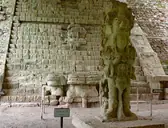 The Hieroglyphic StairwayThe longest Maya textIn the guide
- 05
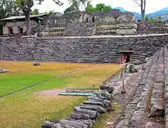 The East CourtHeart of the AcropolisIn the guide
- 06
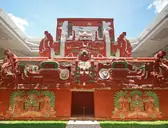 The TunnelsA buried templeIn the guide
- 07
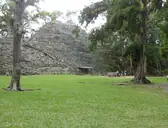 Temple 16 and Altar QSixteen kingsIn the guide
- 08
 The Sculpture MuseumTreasures of CopánIn the guide
Site map of Copán
History of Copán
Copán was built by the Maya, whose civilisation developed in southern Mexico and Central America from around 2000 BCE, with its Classic period of great cities lasting from roughly 250 to 900 CE. People lived in the Copán valley long before the city’s rise, but in 426 CE, according to later inscriptions, a lord called K’inich Yax K’uk’ Mo’ took the throne and founded a dynasty that ruled for four centuries, with sixteen kings in succession. At its height, in the eighth century, the kingdom may have had more than twenty thousand people. In 738 its king was captured and killed by the ruler of Quiriguá, a former vassal. The last known king came to power in 822, royal rule soon ended, and the population gradually declined, though the Maya people live in the region to this day.
Copán guide: questions
How many stops does the Copán guide have?
8 stops, in visit order: 1. The Entrance Path; 2. The Great Plaza; 3. The Ball Court; 4. The Hieroglyphic Stairway; 5. The East Court; 6. The Tunnels; 7. Temple 16 and Altar Q; 8. The Sculpture Museum.
Can I do a self-guided tour of Copán with this guide?
Yes. The guide is made for a self-guided tour: 8 stops in visit order, each with a photo, a story and a voice, so you can explore Copán at your own pace, without joining a group. Download it before you go and it works offline.
How long is each guide?
The 8 stops add up to about 6 minutes of listening in total. You play each stop when you’re ready, so you can go at your own pace.
Does the guide work offline?
Yes, once it’s downloaded. The guide is a single self-contained web page (about 8.9 MB) with the photos, text and audio built in. Download it to your phone before you go (Wi-Fi is best); after that it opens in any modern browser on iPhone or Android, with no app, account or mobile signal needed.
Does it use GPS or need my location?
No. The guide doesn’t use GPS and doesn’t know where you are: you play each stop when you reach it. It works on iPhone and Android in any modern browser, and it’s in English.
What’s included?
One self-contained HTML guide: 8 stops in visit order, each with a photo, text and a voice, plus the story of who built the site.
Who built Copán?
Copán was built by the Maya, whose civilisation developed in southern Mexico and Central America from around 2000 BCE, with its Classic period of great cities lasting from roughly 250 to 900 CE. People lived in the Copán valley long before the city’s rise, but in 426 CE, according to later inscriptions, a lord called K’inich Yax K’uk’ Mo’ took the throne and founded a dynasty that ruled for four centuries, with sixteen kings in succession.
Where is Copán?
Copán lies in a green river valley in western Honduras, close to the border with Guatemala, about a kilometre from the small town of Copán Ruinas.
Is there a free audio guide to Copán?
The first stop, The Entrance Path, is free to read and hear on this page, so you can try the Copán audio tour before you buy. The full guide, with all 8 stops, is a one-off purchase: download it once and it’s yours to keep, working offline.
Is the Copán guide worth it?
If you’d like to know what you’re looking at, yes. For $10 you get 8 stops in visit order, each with a photo, a short history and a voice you play when you’re ready, plus a site map of the stops, and about 6 minutes of listening in all. It’s short on purpose, so you spend your time looking, not listening. It’s yours to keep, works offline and needs no app. The first stop is free on this page, so you can try it before you buy. If you’d like hours of detail, a guided tour will go deeper.
Audio guide or guided tour?
It depends how you like to visit. This guide lets you explore Copán at your own pace, at any time, for a one-off price. A guided tour gives you a live expert you can ask questions, but at fixed times and usually for a higher price. Many people use both: a tour for the big picture, and the guide to read beforehand or to revisit the stops in their own time.
Is this the official Copán guide?
No. It’s an independent guide by The Historian Guide, not affiliated with or endorsed by the operator of Copán. For tickets and opening hours, check the official site operator before you go.
Does the guide include entry tickets or opening hours?
No. The guide is a digital companion only. Admission to Copán is separate, so check the official site operator for current tickets and opening hours before you go.
- Stop 1 · The Entrance Path: Charles J. Sharp · CC BY-SA 4.0 · Wikimedia Commons · resized
- Stop 2 · The Great Plaza: Talk2winik · Public domain · Wikimedia Commons · resized
- Stop 3 · The Ball Court (also the cover): Nosferattus · CC0 · Wikimedia Commons · resized
- Stop 4 · The Hieroglyphic Stairway: Hans Birger Nilsen · CC BY-SA 2.0 · Wikimedia Commons · resized
- Stop 5 · The East Court: Dennis G. Jarvis · CC BY-SA 2.0 · Wikimedia Commons · resized
- Stop 6 · The Tunnels: talk2winik · Public domain · Wikimedia Commons · resized
- Stop 7 · Temple 16 and Altar Q: Hans Birger Nilsen · CC BY-SA 2.0 · Wikimedia Commons · resized
- Stop 8 · The Sculpture Museum: TomasVial · CC BY 4.0 · Wikimedia Commons · resized


All photographs from Wikimedia Commons under the licences shown.
More guides in Honduras
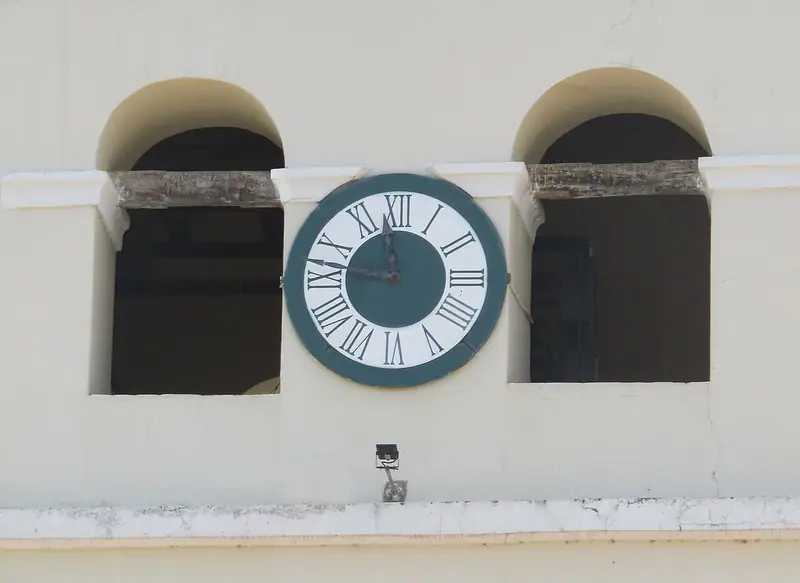 Spanish Colonial7 stops · 1537–1880
Colonial Comayagua audio guide
Explore the colonial heart of Honduras’s old capital, from the cathedral and its famous clock to La Merced and the Caxa Real.
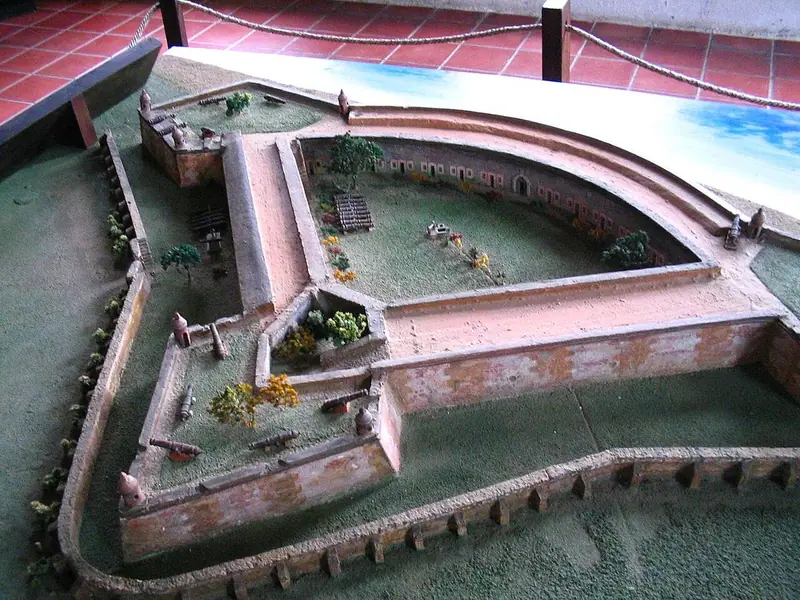 Spanish Colonial7 stops · 1752–1821
San Fernando de Omoa audio guide
Explore the walls, vaults and prison cells of the Spanish fortress built on the Caribbean coast of Honduras to guard the silver of Central America.
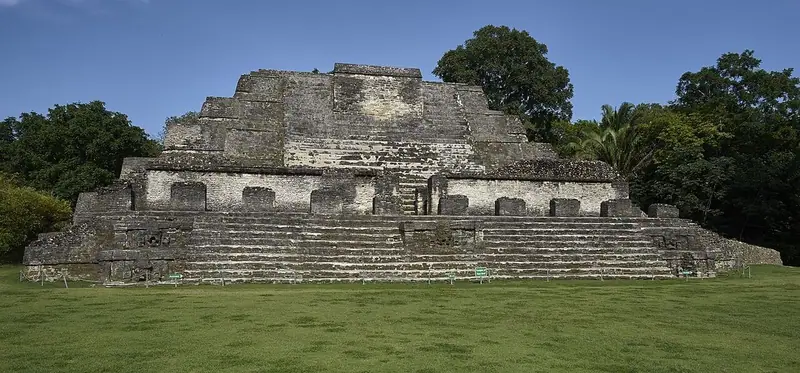 Maya7 stops · c. 900 BCE – 1000 CE
Altun Ha audio guide
Cross the two plazas of a Maya city on the coastal plain of Belize and climb the Temple of the Masonry Altars, where the Jade Head was found.
Every guide, in every country
Copán and every other guide we publish, including future ones. One payment, no subscription.