Before you start
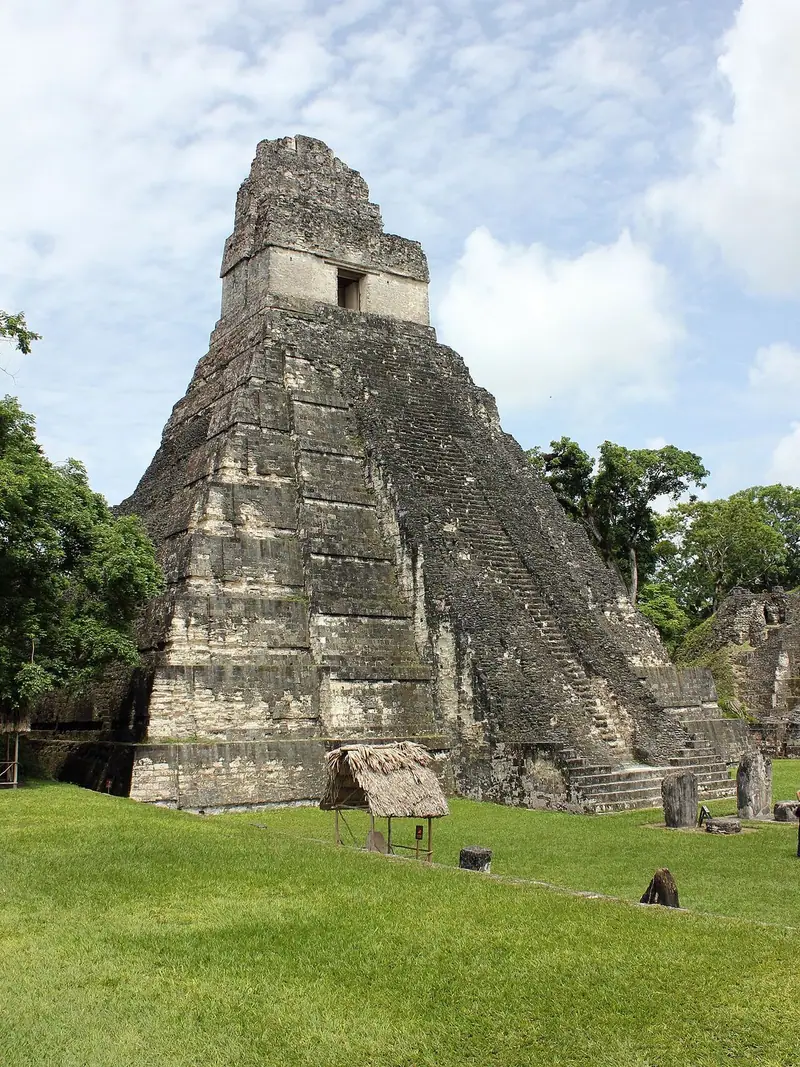
Tikal is one of the largest cities of the ancient Maya, its temple-pyramids rising above the rainforest of northern Guatemala. It lies in Tikal National Park, which was declared a UNESCO World Heritage Site in 1979, about sixty-four kilometres by road from the town of Flores. This guide takes you through the forest to the Great Plaza, with its two great temples and acropolises, then to Temple Five, the Lost World complex and finally Temple Four, the tallest of them all. The site is large and the paths are long, so wear sturdy shoes, carry plenty of water, and protect yourself from the sun and insects. Stay on the paths, follow the instructions of park staff, and never climb where it is forbidden.
Use it as a self-guided tour of Tikal: 8 stops in visit order, each played when you’re ready, at your own pace.
 Free preview · Stop 1
The Rainforest
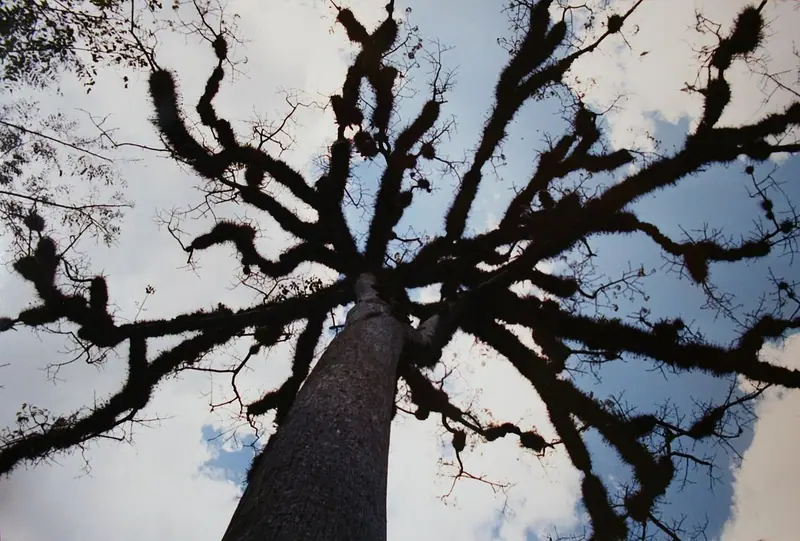
Begin on the forest paths that lead to the heart of the city. Tikal lies in a vast area of tropical forest, and the ruins are surrounded by gigantic trees, including the ceiba, the national tree of Guatemala, sacred to the Maya, who saw it as linking the underworld, the earth and the heavens. Look up into its spreading branches. Listen to the sounds of the forest, and watch for wildlife: spider monkeys and howler monkeys in the trees, coatis on the ground, and birds such as toucans, parrots and ocellated turkeys. Leafcutter ants carry pieces of leaves across the paths. As you walk, notice the low, tree-covered mounds on either side; many of them are unexcavated buildings. In its heyday, this was a great city, with tens of thousands of people.
Photo: Gary Todd from Xinzheng, China · CC0 · Wikimedia Commons
What to see at Tikal: 8 stops, in visit order
- 01
 The RainforestThe Sacred CeibaFree preview
- 02
 Temple OneThe Temple of the Great JaguarIn the guide
- 03
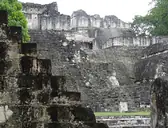 The North AcropolisBurial Place of KingsIn the guide
- 04
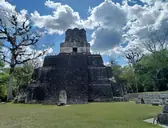 Temple TwoThe Temple of the MasksIn the guide
- 05
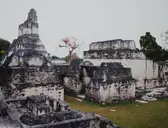 The Central AcropolisThe Royal PalacesIn the guide
- 06
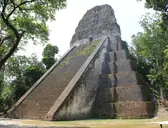 Temple FiveThe Steep ClimbIn the guide
- 07
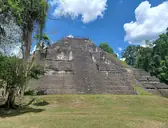 The Lost WorldThe Oldest Heart of TikalIn the guide
- 08
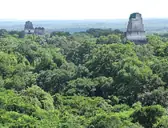 Temple FourAbove the ForestIn the guide
Site map of Tikal
History of Tikal
The first monumental buildings at Tikal date back to the fourth century before Christ. The city reached its height in the Classic Period, between about 200 and 900 CE, when it was the capital of one of the most powerful Maya kingdoms. In 378 CE, it was apparently conquered by forces linked to Teotihuacan, in central Mexico, who installed a new dynasty. After a long rivalry with Calakmul, Tikal revived under kings such as Jasaw Chan Kʼawiil the First, who built many of the temples you see today. By the end of the tenth century, the city had been abandoned to the forest.
Tikal guide: questions
How many stops does the Tikal guide have?
8 stops, in visit order: 1. The Rainforest; 2. Temple One; 3. The North Acropolis; 4. Temple Two; 5. The Central Acropolis; 6. Temple Five; 7. The Lost World; 8. Temple Four.
Can I do a self-guided tour of Tikal with this guide?
Yes. The guide is made for a self-guided tour: 8 stops in visit order, each with a photo, a story and a voice, so you can explore Tikal at your own pace, without joining a group. Download it before you go and it works offline.
How long is each guide?
The 8 stops add up to about 6 minutes of listening in total. You play each stop when you’re ready, so you can go at your own pace.
Does the guide work offline?
Yes, once it’s downloaded. The guide is a single self-contained web page (about 8.9 MB) with the photos, text and audio built in. Download it to your phone before you go (Wi-Fi is best); after that it opens in any modern browser on iPhone or Android, with no app, account or mobile signal needed.
Does it use GPS or need my location?
No. The guide doesn’t use GPS and doesn’t know where you are: you play each stop when you reach it. It works on iPhone and Android in any modern browser, and it’s in English.
What’s included?
One self-contained HTML guide: 8 stops in visit order, each with a photo, text and a voice, plus the story of who built the site.
Who built Tikal?
The first monumental buildings at Tikal date back to the fourth century before Christ. The city reached its height in the Classic Period, between about 200 and 900 CE, when it was the capital of one of the most powerful Maya kingdoms.
Where is Tikal?
Tikal is one of the largest cities of the ancient Maya, its temple-pyramids rising above the rainforest of northern Guatemala.
Is there a free audio guide to Tikal?
The first stop, The Rainforest, is free to read and hear on this page, so you can try the Tikal audio tour before you buy. The full guide, with all 8 stops, is a one-off purchase: download it once and it’s yours to keep, working offline.
Is the Tikal guide worth it?
If you’d like to know what you’re looking at, yes. For $10 you get 8 stops in visit order, each with a photo, a short history and a voice you play when you’re ready, plus a site map of the stops, and about 6 minutes of listening in all. It’s short on purpose, so you spend your time looking, not listening. It’s yours to keep, works offline and needs no app. The first stop is free on this page, so you can try it before you buy. If you’d like hours of detail, a guided tour will go deeper.
Audio guide or guided tour?
It depends how you like to visit. This guide lets you explore Tikal at your own pace, at any time, for a one-off price. A guided tour gives you a live expert you can ask questions, but at fixed times and usually for a higher price. Many people use both: a tour for the big picture, and the guide to read beforehand or to revisit the stops in their own time.
Is this the official Tikal guide?
No. It’s an independent guide by The Historian Guide, not affiliated with or endorsed by the operator of Tikal. For tickets and opening hours, check the official site operator before you go.
Does the guide include entry tickets or opening hours?
No. The guide is a digital companion only. Admission to Tikal is separate, so check the official site operator for current tickets and opening hours before you go.
- Stop 1 · The Rainforest: Gary Todd from Xinzheng, China · CC0 · Wikimedia Commons · resized
- Stop 2 · Temple One (also the cover): Kaldari · CC0 · Wikimedia Commons · resized
- Stop 3 · The North Acropolis: Adam Jones from Kelowna, BC, Canada · CC BY-SA 2.0 · Wikimedia Commons · resized
- Stop 4 · Temple Two: Simon Burchell · CC BY-SA 4.0 · Wikimedia Commons · resized
- Stop 5 · The Central Acropolis: Gary Todd from Xinzheng, China · CC0 · Wikimedia Commons · resized
- Stop 6 · Temple Five: Arian Zwegers from Brussels, Belgium · CC BY 2.0 · Wikimedia Commons · resized
- Stop 7 · The Lost World: Simon Burchell · CC BY-SA 4.0 · Wikimedia Commons · resized
- Stop 8 · Temple Four: Adam Jones from Kelowna, BC, Canada · CC BY-SA 2.0 · Wikimedia Commons · resized


All photographs from Wikimedia Commons under the licences shown.
More guides in Guatemala
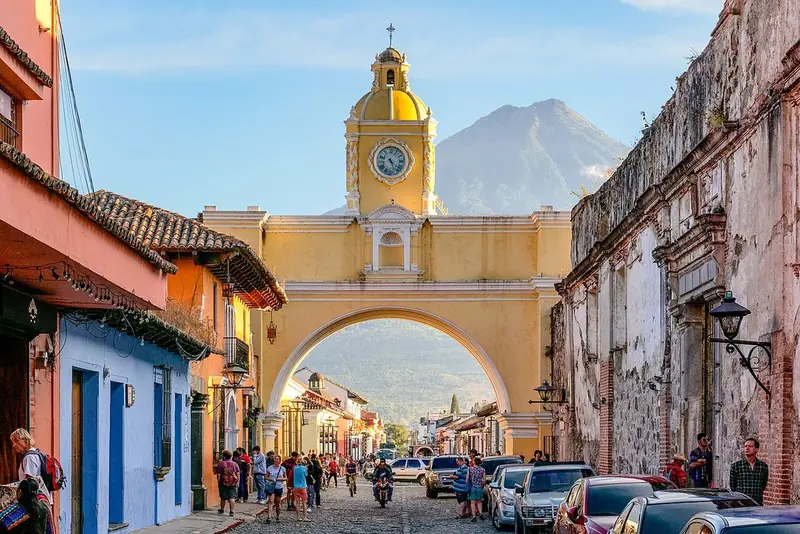 Spanish Colonial7 stops · 1543–1773 CE
Antigua Guatemala audio guide
The grid of Santiago de los Caballeros beneath three volcanoes, from the Central Park and the cathedral to the Santa Catalina Arch, La Merced and the Capuchinas.
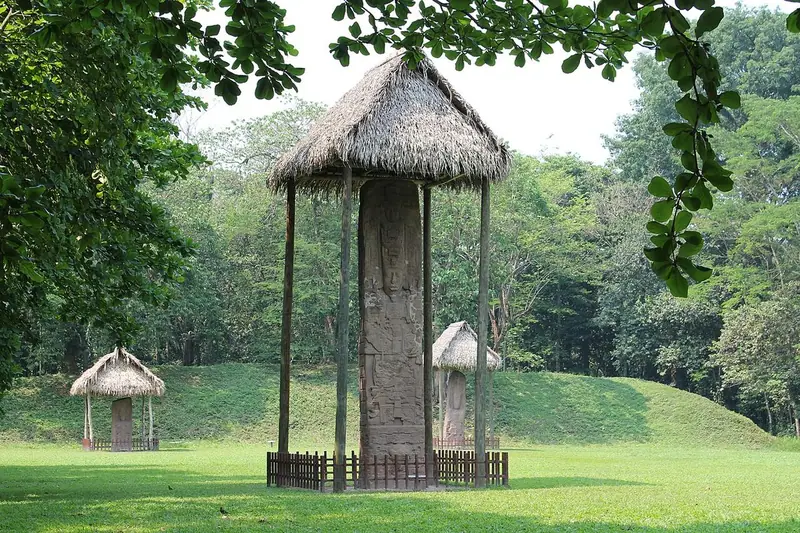 Maya7 stops · 5th century – 810 CE
Quiriguá audio guide
The Great Plaza of Quiriguá and some of the finest carved monuments of the Maya world, including the tallest stela the Maya ever raised.
 Maya7 stops · c. 900 BCE – 1000 CE
Altun Ha audio guide
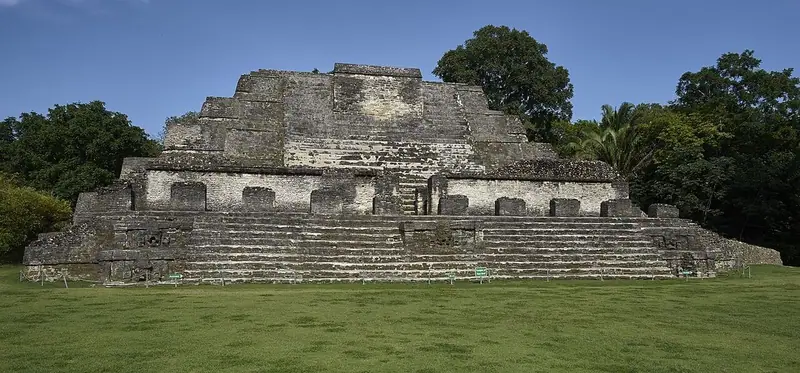
Cross the two plazas of a Maya city on the coastal plain of Belize and climb the Temple of the Masonry Altars, where the Jade Head was found.
Every guide, in every country
Tikal and every other guide we publish, including future ones. One payment, no subscription.