Before you start
The Ancient Agora lies just below the north-west slope of the Acropolis, between the neighbourhoods of Monastiraki and Thiseio, and was the beating heart of ancient Athens: its market place, civic centre and favourite meeting ground. Here citizens shopped, argued, voted and went to court, and Socrates questioned anyone who would stop to listen. The Agora is not on the UNESCO World Heritage list, which in Athens covers the Acropolis, but it is one of the city’s great archaeological sites. It has been excavated since 1931 by the American School of Classical Studies at Athens, working with the Greek state, and is cared for by the Hellenic Ministry of Culture. This guide follows a natural loop from the northern entrance on Adrianou Street: along the Panathenaic Way to the Odeon of Agrippa, across to the Stoa of Zeus, up to the Temple of Hephaestus, down to the civic buildings, to the Byzantine Church of the Holy Apostles, and finally to the rebuilt Stoa of Attalos and its museum.
Use it as a self-guided tour of the Ancient Agora of Athens: 7 stops in visit order, each played when you’re ready, at your own pace.
 Free preview · Stop 1
Panathenaic Way
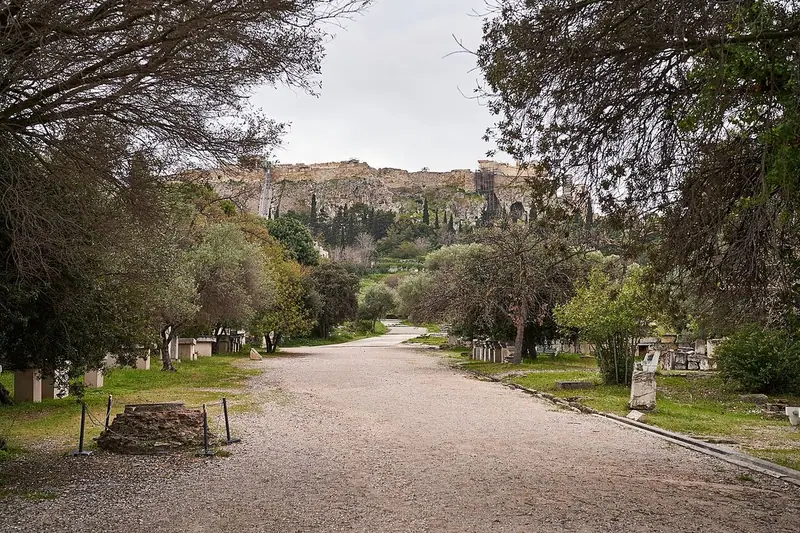
From the entrance, step onto the broad gravel road that cuts diagonally across the site. This is the Panathenaic Way, the main street of ancient Athens, running from the city’s main gate at the Dipylon, through the Agora and up to the Acropolis. Every four years it carried the grandest procession of the Athenian year, the Great Panathenaia, when citizens, priests, horsemen and sacrificial animals escorted a new woven robe up to the ancient statue of Athena. On ordinary days the open stretches alongside became a racecourse for chariot and horse events, and a place where the cavalry trained and showed off. Look up the slope from here and you can trace the procession’s route, rising towards the Acropolis. This is the very ground where the people of Athens walked, traded and talked for over a thousand years.
Photo: George E. Koronaios · CC BY-SA 4.0 · Wikimedia Commons
What to see at the Ancient Agora of Athens: 7 stops, in visit order
- 01
 Panathenaic WayPanathinaïkí OdósFree preview
- 02
 Odeon of AgrippaOdeío tou AgríppaIn the guide
- 03
 Stoa of ZeusStoá tou Diós EleftheríouIn the guide
- 04
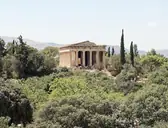 Temple of HephaestusNaós tou IfaístouIn the guide
- 05
 Tholos and BouleuterionThólos kai VouleftírioIn the guide
- 06
 Church of the Holy ApostlesÁgioi Apóstoloi SolákisIn the guide
- 07
 Stoa of AttalosStoá tou AttálouIn the guide
Site map of the Ancient Agora of Athens
History of the Ancient Agora of Athens
The Agora was shaped by the ancient Greeks of Athens over many centuries. People were burying their dead here in the Bronze Age, in the Mycenaean era of about 1600 to 1100 BCE, but the open square took shape in the Archaic period, from about 800 BCE, and especially in the sixth century BCE. The Classical age, when Athens invented democracy after 508 BCE, filled it with council houses, law courts and long colonnaded stoas, and Hellenistic kings added gifts of their own. That Greek world ended with the Roman conquest in 146 BCE, and Romans then built an odeon and temples in the square. After the Herulian sack of 267 CE the area slowly shrank, and the Byzantines, whose empire lasted from 330 to 1453, raised a church here around the year 1000. Greeks still live all around it today, in the busy streets of Monastiraki.
Ancient Agora of Athens guide: questions
How many stops does the Ancient Agora of Athens guide have?
7 stops, in visit order: 1. Panathenaic Way; 2. Odeon of Agrippa; 3. Stoa of Zeus; 4. Temple of Hephaestus; 5. Tholos and Bouleuterion; 6. Church of the Holy Apostles; 7. Stoa of Attalos.
Can I do a self-guided tour of the Ancient Agora of Athens with this guide?
Yes. The guide is made for a self-guided tour: 7 stops in visit order, each with a photo, a story and a voice, so you can explore the Ancient Agora of Athens at your own pace, without joining a group. Download it before you go and it works offline.
How long is each guide?
The 7 stops add up to about 7 minutes of listening in total. You play each stop when you’re ready, so you can go at your own pace.
Does the guide work offline?
Yes, once it’s downloaded. The guide is a single self-contained web page (about 8.5 MB) with the photos, text and audio built in. Download it to your phone before you go (Wi-Fi is best); after that it opens in any modern browser on iPhone or Android, with no app, account or mobile signal needed.
Does it use GPS or need my location?
No. The guide doesn’t use GPS and doesn’t know where you are: you play each stop when you reach it. It works on iPhone and Android in any modern browser, and it’s in English.
What’s included?
One self-contained HTML guide: 7 stops in visit order, each with a photo, text and a voice, plus the story of who built the site.
Who built the Ancient Agora of Athens?
The Agora was shaped by the ancient Greeks of Athens over many centuries. People were burying their dead here in the Bronze Age, in the Mycenaean era of about 1600 to 1100 BCE, but the open square took shape in the Archaic period, from about 800 BCE, and especially in the sixth century BCE.
Where is the Ancient Agora of Athens?
The Ancient Agora lies just below the north-west slope of the Acropolis, between the neighbourhoods of Monastiraki and Thiseio, and was the beating heart of ancient Athens: its market place, civic centre and favourite meeting ground.
Is there a free audio guide to the Ancient Agora of Athens?
The first stop, Panathenaic Way, is free to read and hear on this page, so you can try the Ancient Agora of Athens audio tour before you buy. The full guide, with all 7 stops, is a one-off purchase: download it once and it’s yours to keep, working offline.
Is the Ancient Agora of Athens guide worth it?
If you’d like to know what you’re looking at, yes. For $10 you get 7 stops in visit order, each with a photo, a short history and a voice you play when you’re ready, plus a site map of the stops, and about 7 minutes of listening in all. It’s short on purpose, so you spend your time looking, not listening. It’s yours to keep, works offline and needs no app. The first stop is free on this page, so you can try it before you buy. If you’d like hours of detail, a guided tour will go deeper.
Audio guide or guided tour?
It depends how you like to visit. This guide lets you explore the Ancient Agora of Athens at your own pace, at any time, for a one-off price. A guided tour gives you a live expert you can ask questions, but at fixed times and usually for a higher price. Many people use both: a tour for the big picture, and the guide to read beforehand or to revisit the stops in their own time.
Is this the official Ancient Agora of Athens guide?
No. It’s an independent guide by The Historian Guide, not affiliated with or endorsed by the operator of the Ancient Agora of Athens. For tickets and opening hours, check the official site operator before you go.
Does the guide include entry tickets or opening hours?
No. The guide is a digital companion only. Admission to the Ancient Agora of Athens is separate, so check the official site operator for current tickets and opening hours before you go.
- Stop 1 · Panathenaic Way: George E. Koronaios · CC BY-SA 4.0 · Wikimedia Commons · resized
- Stop 2 · Odeon of Agrippa: George E. Koronaios · CC BY-SA 4.0 · Wikimedia Commons · resized
- Stop 3 · Stoa of Zeus: Mark Landon (photographed in 1991; digitized in 2021) · CC BY 4.0 · Wikimedia Commons · resized
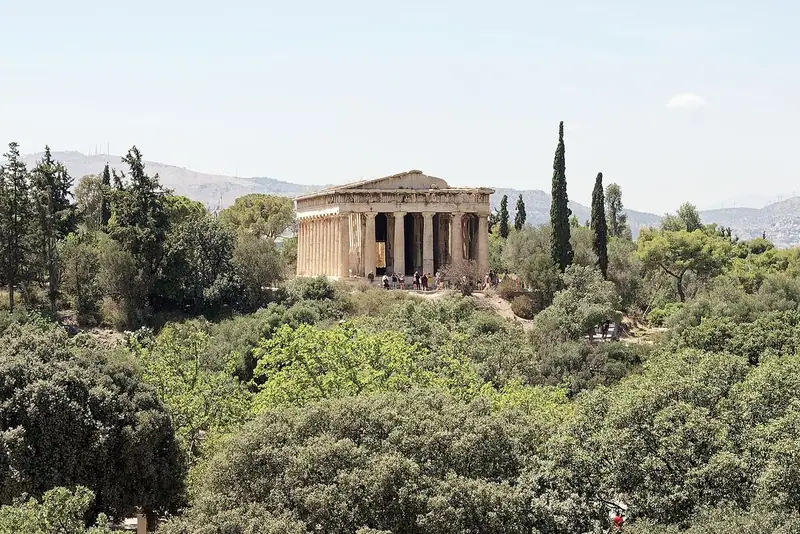
- Stop 4 · Temple of Hephaestus (also the cover): Jakub Hałun · CC BY 4.0 · Wikimedia Commons · resized
- Stop 5 · Tholos and Bouleuterion: C messier · CC BY-SA 4.0 · Wikimedia Commons · resized
- Stop 6 · Church of the Holy Apostles: Jebulon · CC0 · Wikimedia Commons · resized
- Stop 7 · Stoa of Attalos: Julian Lupyan · CC0 · Wikimedia Commons · resized


All photographs from Wikimedia Commons under the licences shown.
More guides in Greece
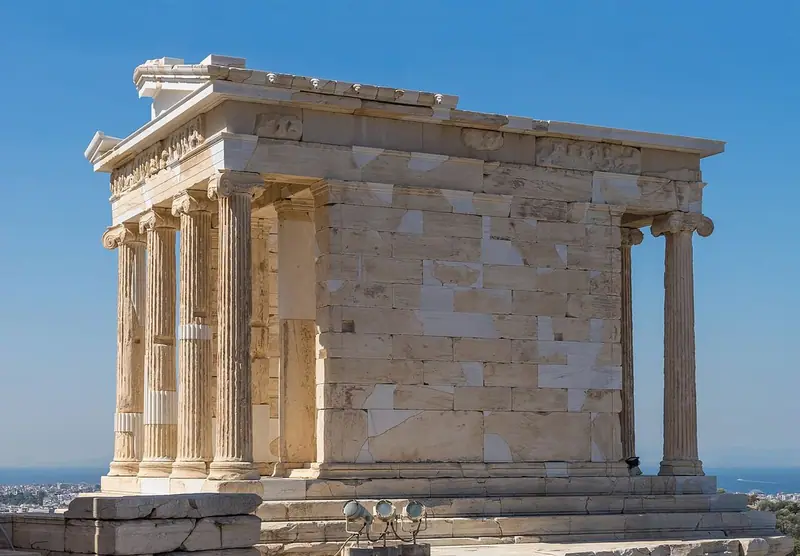 Greek7 stops · 5th century BCE
Acropolis of Athens audio guide
Climb through the Propylaia to the Parthenon and the Erechtheion, on the rock that has crowned Athens for three thousand years.
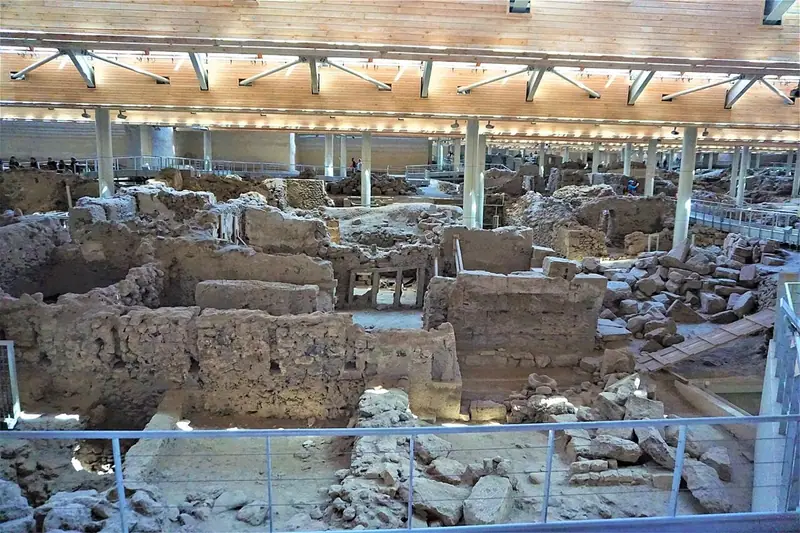 Minoan7 stops · c. 2000–1600 BCE
Akrotiri audio guide
The streets of a Bronze Age town buried by Santorini’s volcano, preserved beneath a great modern roof.
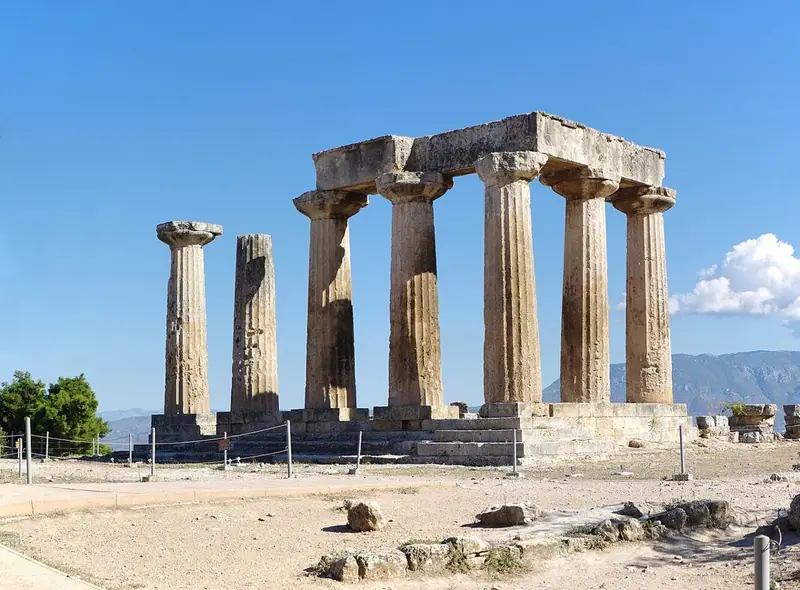 Roman7 stops · 6th century BCE – 4th century CE
Ancient Corinth audio guide
The Temple of Apollo, the Roman forum and the Bema, with the great rock of Acrocorinth above.
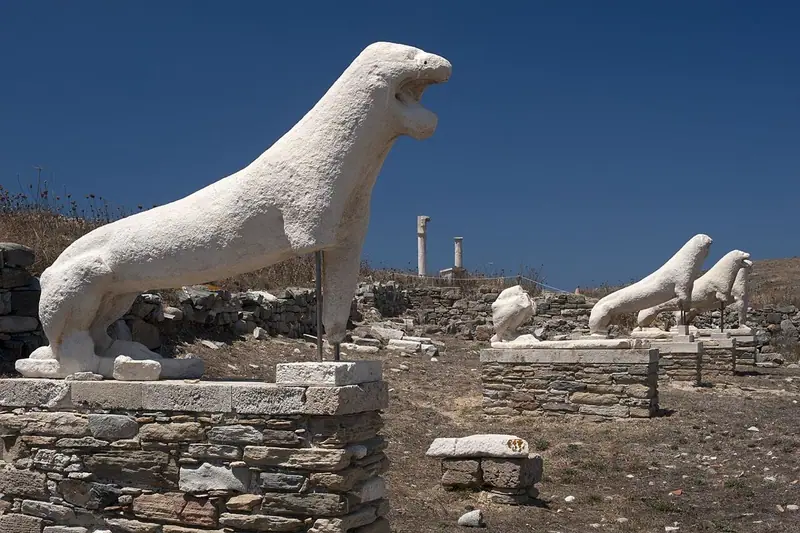 Greek7 stops · c. 800 BCE – 1st century BCE
Delos audio guide
The sacred island of Apollo: the Terrace of the Lions, mosaic-floored houses and the climb up Mount Kynthos.
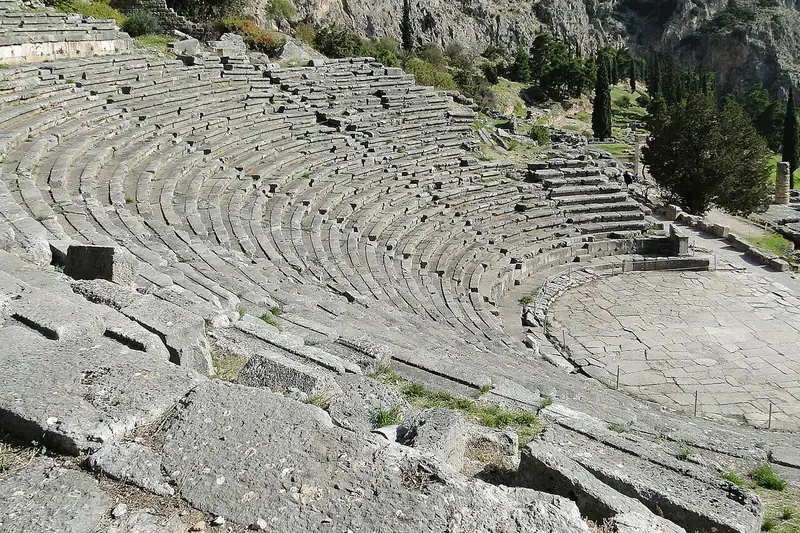 Greek8 stops · 8th century BCE – 4th century CE
Delphi audio guide
Up the Sacred Way past the treasuries to Apollo’s temple, the theatre and the stadium, high on the slopes of Parnassus.
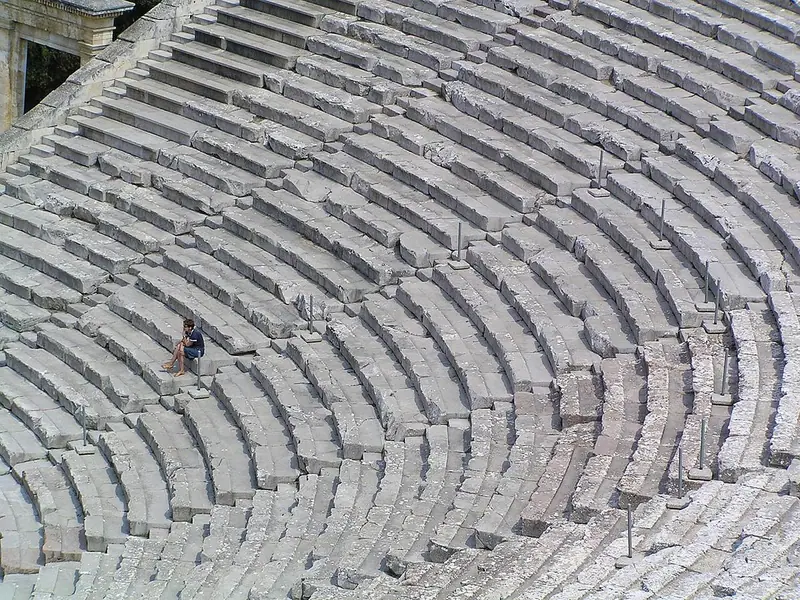 Greek7 stops · 4th century BCE
Epidaurus audio guide
The healing sanctuary of Asklepios, with its celebrated theatre, stadium and the mysterious Tholos.
Every guide, in every country
Ancient Agora of Athens and every other guide we publish, including future ones. One payment, no subscription.