Before you start
Arles stands on the banks of the Rhône in Provence, at the head of the delta where the river divides on its way to the Mediterranean. Founded as a Roman colony by Julius Caesar, it became one of the great cities of Roman Gaul, and in the fourth century a favourite residence of the Emperor Constantine. In the Middle Ages it rose again as a centre of pilgrimage and the capital of a kingdom, and its Romanesque church of Saint-Trophime is one of the masterpieces of Provence. UNESCO inscribed Arles, Roman and Romanesque Monuments as a World Heritage Site in 1981, as an outstanding example of an ancient city adapted to medieval Europe. This guide begins at the amphitheatre, crosses the old town to the Baths of Constantine by the Rhône, continues through the forum to Saint-Trophime, and ends at the Alyscamps, the Roman theatre and the museum of ancient Arles.
Use it as a self-guided tour of Roman and Romanesque Arles: 10 stops in visit order, each played when you’re ready, at your own pace.
 Free preview · Stop 1
The Amphitheatre
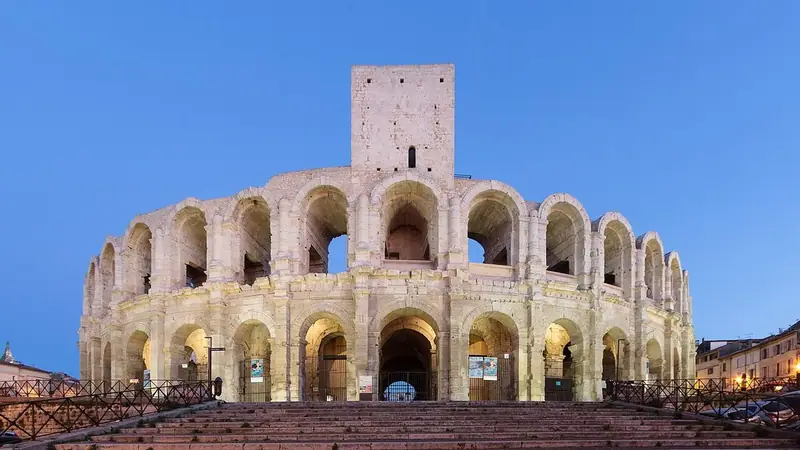
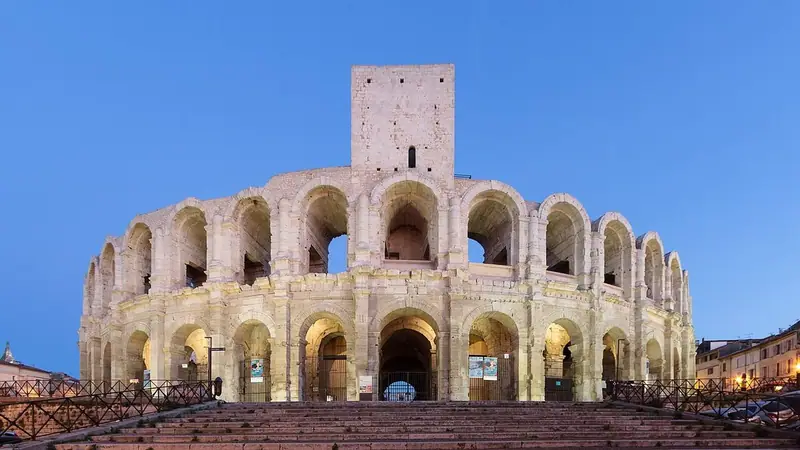
Begin at the amphitheatre, known in French as the Arènes, built around 90 CE, soon after the Colosseum in Rome. It measures 136 metres by 109 metres and once held over twenty thousand spectators, who came to watch gladiators fight and wild animals hunted. Its two storeys of arcades, with sixty arches on each level, still enclose the oval arena. After the fall of the Western Empire, the amphitheatre became a fortress, and four towers were added, three of which still stand. More than two hundred houses and two chapels were built inside it, forming a small town of its own. In the 1820s the houses began to be cleared, and in 1830 the arena held its first show, a bull race. Today it hosts bullfights during the Arles feria, as well as concerts and plays. Climb one of the towers for a view over the rooftops.
Photo: PierreSelim · CC BY 3.0 · Wikimedia Commons
What to see at Roman and Romanesque Arles: 10 stops, in visit order
- 01
 The AmphitheatreGames for twenty thousandFree preview
- 02
 The Baths of ConstantineAn emperor’s public bathsIn the guide
- 03
 Place du ForumWhere Van Gogh painted the caféIn the guide
- 04
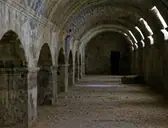 The CryptoporticusGalleries beneath the forumIn the guide
- 05
 Place de la République and the ObeliskA Roman obelisk before the town hallIn the guide
- 06
 The Portal of Saint-TrophimeThe Last Judgement in stoneIn the guide
- 07
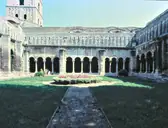 The Cloister of Saint-TrophimeRomanesque and Gothic side by sideIn the guide
- 08
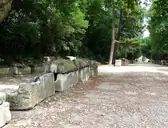 The AlyscampsAvenue of the deadIn the guide
- 09
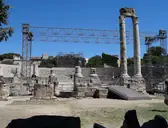 The Roman TheatreThe two widowsIn the guide
- 10
 The Museum of Ancient ArlesA Roman barge from the RhôneIn the guide
Site map of Roman and Romanesque Arles
History of Roman and Romanesque Arles
Celtic peoples and Greek traders from Marseille were established here before the Romans. In 49 BCE Arles supported Julius Caesar against Marseille, and in 46 BCE he rewarded it by founding a colony for veterans of his Sixth Legion. Under Augustus and his successors the city gained a forum, a theatre, an amphitheatre and a circus. In the fourth century the Emperor Constantine lived here, and in 314 he summoned a council of bishops to Arles; in the fifth century it was briefly the capital of the Western Empire under the usurper Constantine the Third. In the Middle Ages, Arles was the capital of a kingdom, and in 1178 the Emperor Frederick Barbarossa was crowned King of Arles in Saint-Trophime. In 1888 and 1889 Vincent van Gogh lived here, painting some three hundred works in fifteen months.
Roman and Romanesque Arles guide: questions
How many stops does the Roman and Romanesque Arles guide have?
10 stops, in visit order: 1. The Amphitheatre; 2. The Baths of Constantine; 3. Place du Forum; 4. The Cryptoporticus; 5. Place de la République and the Obelisk; 6. The Portal of Saint-Trophime; 7. The Cloister of Saint-Trophime; 8. The Alyscamps; 9. The Roman Theatre; 10. The Museum of Ancient Arles.
Can I do a self-guided tour of Roman and Romanesque Arles with this guide?
Yes. The guide is made for a self-guided tour: 10 stops in visit order, each with a photo, a story and a voice, so you can explore Roman and Romanesque Arles at your own pace, without joining a group. Download it before you go and it works offline.
How long do you need at Roman and Romanesque Arles?
We suggest allowing A full day. The 10 stops add up to about 8 minutes of listening, and you play each one when you’re ready, so you can linger wherever you like.
How long is each guide?
The 10 stops add up to about 8 minutes of listening in total. You play each stop when you’re ready, so you can go at your own pace.
Does the guide work offline?
Yes, once it’s downloaded. The guide is a single self-contained web page (about 9.2 MB) with the photos, text and audio built in. Download it to your phone before you go (Wi-Fi is best); after that it opens in any modern browser on iPhone or Android, with no app, account or mobile signal needed.
Does it use GPS or need my location?
No. The guide doesn’t use GPS and doesn’t know where you are: you play each stop when you reach it. It works on iPhone and Android in any modern browser, and it’s in English.
What’s included?
One self-contained HTML guide: 10 stops in visit order, each with a photo, text and a voice, plus the story of who built the site.
Who built Roman and Romanesque Arles?
Celtic peoples and Greek traders from Marseille were established here before the Romans. In 49 BCE Arles supported Julius Caesar against Marseille, and in 46 BCE he rewarded it by founding a colony for veterans of his Sixth Legion.
Where is Roman and Romanesque Arles?
Arles stands on the banks of the Rhône in Provence, at the head of the delta where the river divides on its way to the Mediterranean.
Is there a free audio guide to Roman and Romanesque Arles?
The first stop, The Amphitheatre, is free to read and hear on this page, so you can try the Roman and Romanesque Arles audio tour before you buy. The full guide, with all 10 stops, is a one-off purchase: download it once and it’s yours to keep, working offline.
Is the Roman and Romanesque Arles guide worth it?
If you’d like to know what you’re looking at, yes. For $10 you get 10 stops in visit order, each with a photo, a short history and a voice you play when you’re ready, plus a site map of the stops, and about 8 minutes of listening in all. It’s short on purpose, so you spend your time looking, not listening. It’s yours to keep, works offline and needs no app. The first stop is free on this page, so you can try it before you buy. If you’d like hours of detail, a guided tour will go deeper.
Audio guide or guided tour?
It depends how you like to visit. This guide lets you explore Roman and Romanesque Arles at your own pace, at any time, for a one-off price. A guided tour gives you a live expert you can ask questions, but at fixed times and usually for a higher price. Many people use both: a tour for the big picture, and the guide to read beforehand or to revisit the stops in their own time.
Is this the official Roman and Romanesque Arles guide?
No. It’s an independent guide by The Historian Guide, not affiliated with or endorsed by the operator of Roman and Romanesque Arles. For tickets and opening hours, check the official site operator before you go.
Does the guide include entry tickets or opening hours?
No. The guide is a digital companion only. Admission to Roman and Romanesque Arles is separate, so check the official site operator for current tickets and opening hours before you go.
- Stop 1 · The Amphitheatre (also the cover): PierreSelim · CC BY 3.0 · Wikimedia Commons · resized
- Stop 2 · The Baths of Constantine: GO69 · CC BY-SA 3.0 · Wikimedia Commons · resized
- Stop 3 · Place du Forum: Isiwal/Wikimedia Commons · CC BY-SA 3.0 · Wikimedia Commons · resized
- Stop 4 · The Cryptoporticus: Bjs · CC BY-SA 4.0 · Wikimedia Commons · resized
- Stop 5 · Place de la République and the Obelisk: Chris06 · CC BY-SA 4.0 · Wikimedia Commons · resized
- Stop 6 · The Portal of Saint-Trophime: Oursana · CC0 · Wikimedia Commons · resized
- Stop 7 · The Cloister of Saint-Trophime: Rolf Süssbrich · CC BY-SA 4.0 · Wikimedia Commons · resized
- Stop 8 · The Alyscamps: Hawobo at German Wikipedia · CC BY-SA 2.0 de · Wikimedia Commons · resized
- Stop 9 · The Roman Theatre: Guiguilacagouille · CC BY-SA 3.0 · Wikimedia Commons · resized
- Stop 10 · The Museum of Ancient Arles: Tylwyth Eldar · CC BY-SA 4.0 · Wikimedia Commons · resized


All photographs from Wikimedia Commons under the licences shown.
More guides in France
 Napoleonic France8 stops · Napoleonic era
Arc de Triomphe audio guide
Cross beneath the traffic to Napoleon’s arch, read its carved victories and the names of its generals, then climb to the rooftop terrace.
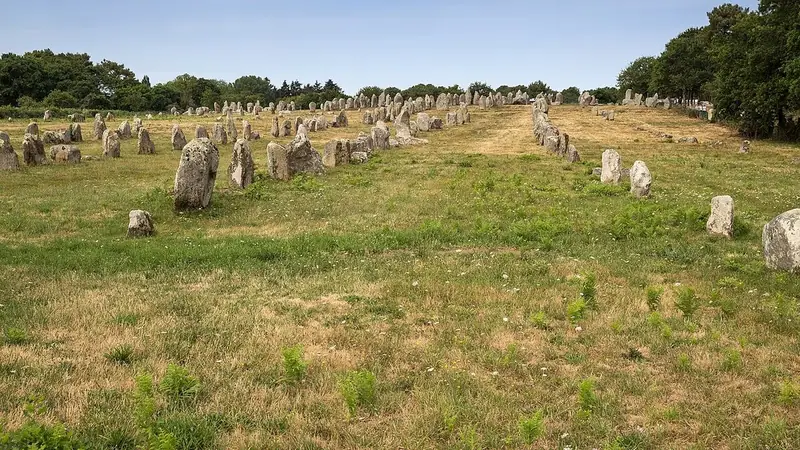 Neolithic10 stops · c. 5000 – 2300 BCE (megalith building)
Carnac Megaliths audio guide
Thousands of standing stones in rows, giant mounds and decorated tombs: the alignments of Carnac, the broken menhir of Locmariaquer and the carved cairn of Gavrinis.
 Gothic8 stops · 12th–13th century CE
Chartres Cathedral audio guide
Step through the Royal Portal into a Gothic cathedral rebuilt after the fire of 1194, with its labyrinth and the deep Chartres blue of its glass.
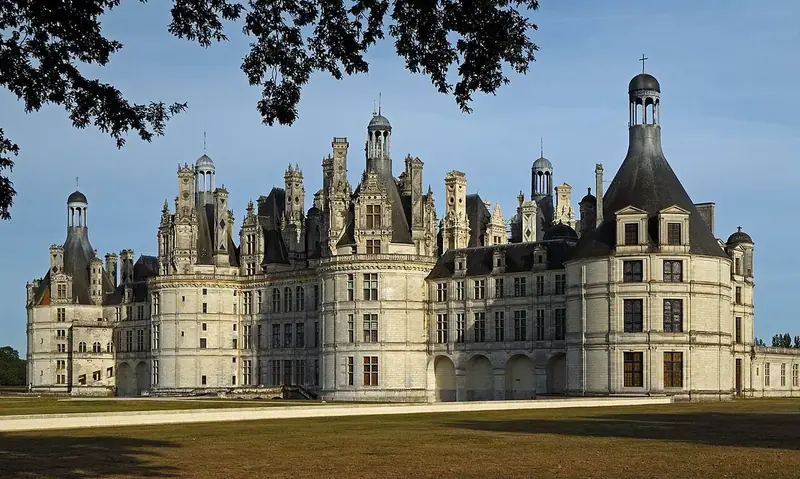 Renaissance8 stops · from 1519 CE
Château de Chambord audio guide
Climb the double-helix staircase of François I’s great hunting château to roof terraces crowded with chimneys and turrets, above a vast walled forest park.
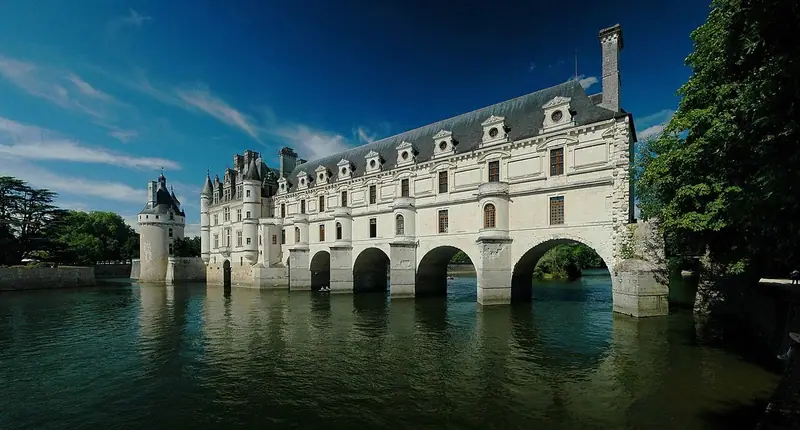 Renaissance8 stops · 1513–1521 CE
Château de Chenonceau audio guide
Cross the River Cher on the long gallery of the château built under Katherine Briçonnet’s eye and later home to Diane de Poitiers.
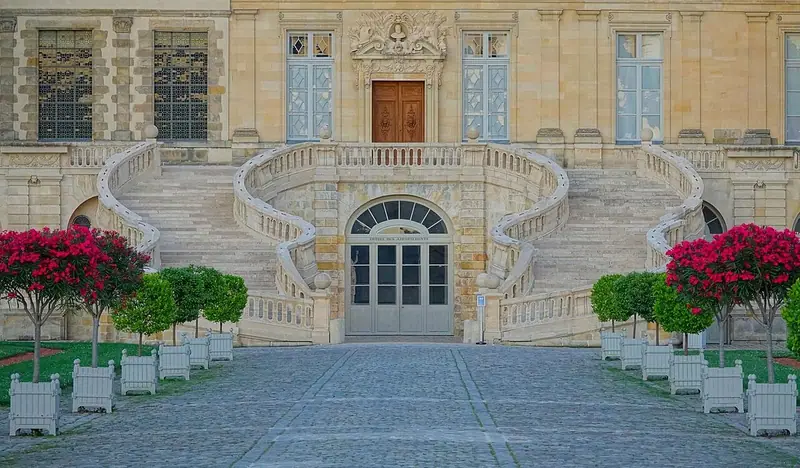 Renaissance8 stops · from 1528 CE
Château de Fontainebleau audio guide
From the Courtyard of Farewells through François I’s Renaissance gallery to the throne room and Napoleon’s apartments.
Every guide, in every country
Roman and Romanesque Arles and every other guide we publish, including future ones. One payment, no subscription.