Before you start
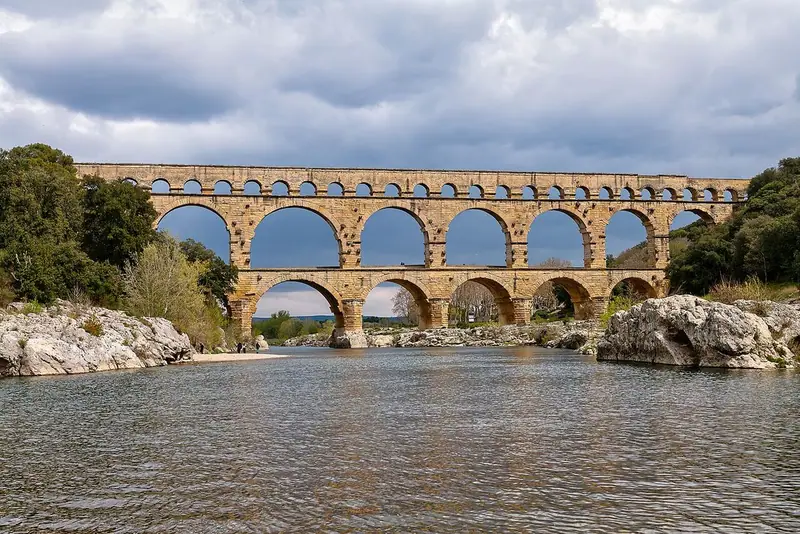
The Pont du Gard is a Roman aqueduct bridge over the River Gardon in the south of France, about twenty-five kilometres from Nîmes and from Avignon. It has been a UNESCO World Heritage Site since 1985 and is managed by a public body that runs the whole site, with its museum and paths. Most visitors arrive by car at the car parks on the left bank, near the village of Remoulins, or at the right bank entrance; there are also buses from Nîmes and Avignon. The site is large and spread along both banks of the river. This guide starts at the visitor centre on the left bank, crosses the river beside the aqueduct, climbs to a viewpoint above it, and ends with the water channel on top of the bridge. Paths are mostly level near the bridge but steep and rocky on the hill trails.
Use it as a self-guided tour of the Pont du Gard: 7 stops in visit order, each played when you’re ready, at your own pace.
 Free preview · Stop 1
The Museum
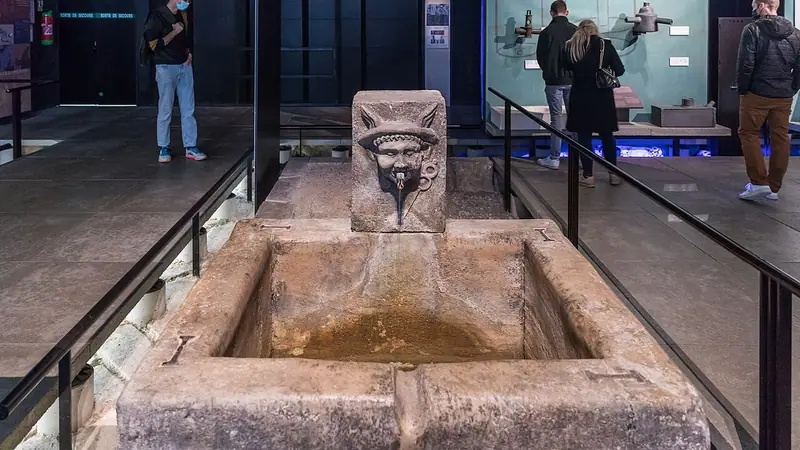
Begin at the visitor centre on the left bank, where the museum explains how and why the aqueduct was built. Take some time here before you see the bridge itself. The displays show the route of the aqueduct, which followed the contours of the hills for about fifty kilometres, crossing valleys on bridges and passing through tunnels, to bring water from springs near Uzès to the Roman city of Nîmes. Look for the models and reconstructions showing how the Romans lifted the huge stones into place with cranes powered by men walking inside large wheels, and how they used wooden frames to build the arches. The museum also explains what the water was used for in Nîmes, such as fountains and baths, and has full-size reconstructions of the nearby Roman quarry of l’Estel, which is closed to the public. When you are ready, follow the path towards the river.
Photo: Raimond Spekking · CC BY-SA 4.0 · Wikimedia Commons
What to see at the Pont du Gard: 7 stops, in visit order
- 01
 The MuseumUnderstanding the aqueductFree preview
- 02
 The First ViewFrom the left bankIn the guide
- 03
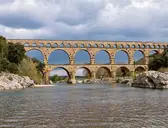 Pitot’s BridgeCrossing the riverIn the guide
- 04
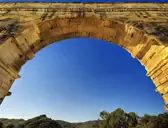 The Roman StonesHow it was builtIn the guide
- 05
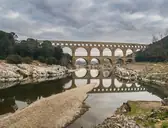 The River GardonA force of natureIn the guide
- 06
 The Right Bank ViewpointLooking down on the bridgeIn the guide
- 07
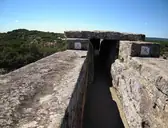 The Water ChannelAt the top of the bridgeIn the guide
Site map of the Pont du Gard
History of the Pont du Gard
The Pont du Gard was built by the Romans. According to tradition, the city of Rome was founded in 753 BCE; it grew into an empire around the Mediterranean, and the western half of that empire came to an end in 476 CE. The south of France became a Roman province in the late second century BCE, and Nîmes, called Nemausus, became a prosperous Roman city. In the first century CE, probably around the middle of the century, the Romans built an aqueduct about fifty kilometres long to carry spring water from near Uzès to Nîmes. The Pont du Gard carried it across the valley of the Gardon. The aqueduct was used for several centuries, until deposits of limestone clogged its channel and it was abandoned.
The full history continues in the guide.
Pont du Gard guide: questions
How many stops does the Pont du Gard guide have?
7 stops, in visit order: 1. The Museum; 2. The First View; 3. Pitot’s Bridge; 4. The Roman Stones; 5. The River Gardon; 6. The Right Bank Viewpoint; 7. The Water Channel.
Can I do a self-guided tour of the Pont du Gard with this guide?
Yes. The guide is made for a self-guided tour: 7 stops in visit order, each with a photo, a story and a voice, so you can explore the Pont du Gard at your own pace, without joining a group. Download it before you go and it works offline.
How long is each guide?
The 7 stops add up to about 5 minutes of listening in total. You play each stop when you’re ready, so you can go at your own pace.
Does the guide work offline?
Yes, once it’s downloaded. The guide is a single self-contained web page (about 6.6 MB) with the photos, text and audio built in. Download it to your phone before you go (Wi-Fi is best); after that it opens in any modern browser on iPhone or Android, with no app, account or mobile signal needed.
Does it use GPS or need my location?
No. The guide doesn’t use GPS and doesn’t know where you are: you play each stop when you reach it. It works on iPhone and Android in any modern browser, and it’s in English.
What’s included?
One self-contained HTML guide: 7 stops in visit order, each with a photo, text and a voice, plus the story of who built the site.
Who built the Pont du Gard?
The Pont du Gard was built by the Romans. According to tradition, the city of Rome was founded in 753 BCE; it grew into an empire around the Mediterranean, and the western half of that empire came to an end in 476 CE.
Where is the Pont du Gard?
The Pont du Gard is a Roman aqueduct bridge over the River Gardon in the south of France, about twenty-five kilometres from Nîmes and from Avignon.
Is there a free audio guide to the Pont du Gard?
The first stop, The Museum, is free to read and hear on this page, so you can try the Pont du Gard audio tour before you buy. The full guide, with all 7 stops, is a one-off purchase: download it once and it’s yours to keep, working offline.
Is the Pont du Gard guide worth it?
If you’d like to know what you’re looking at, yes. For $10 you get 7 stops in visit order, each with a photo, a short history and a voice you play when you’re ready, plus a site map of the stops, and about 5 minutes of listening in all. It’s short on purpose, so you spend your time looking, not listening. It’s yours to keep, works offline and needs no app. The first stop is free on this page, so you can try it before you buy. If you’d like hours of detail, a guided tour will go deeper.
Audio guide or guided tour?
It depends how you like to visit. This guide lets you explore the Pont du Gard at your own pace, at any time, for a one-off price. A guided tour gives you a live expert you can ask questions, but at fixed times and usually for a higher price. Many people use both: a tour for the big picture, and the guide to read beforehand or to revisit the stops in their own time.
Is this the official Pont du Gard guide?
No. It’s an independent guide by The Historian Guide, not affiliated with or endorsed by the operator of the Pont du Gard. For tickets and opening hours, check the official site operator before you go.
Does the guide include entry tickets or opening hours?
No. The guide is a digital companion only. Admission to the Pont du Gard is separate, so check the official site operator for current tickets and opening hours before you go.
- Stop 1 · The Museum: © Raimond Spekking / CC BY-SA 4.0 (via Wikimedia Commons) · CC BY-SA 4.0 · Wikimedia Commons · resized
- Stop 2 · The First View: LucT · CC BY-SA 3.0 · Wikimedia Commons · resized
- Stop 3 · Pitot’s Bridge (also the cover): Rolf Kranz · CC BY-SA 4.0 · Wikimedia Commons · resized
- Stop 4 · The Roman Stones: Wolfgang Staudt from Saarbruecken, Germany · CC BY 2.0 · Wikimedia Commons · resized
- Stop 5 · The River Gardon: Krzysztof Golik · CC BY-SA 4.0 · Wikimedia Commons · resized
- Stop 6 · The Right Bank Viewpoint: OldfashionFreak · CC BY-SA 4.0 · Wikimedia Commons · resized
- Stop 7 · The Water Channel: Jacques Le Letty · CC BY-SA 4.0 · Wikimedia Commons · resized


All photographs from Wikimedia Commons under the licences shown.
More guides in France
 Napoleonic France8 stops · Napoleonic era
Arc de Triomphe audio guide
Cross beneath the traffic to Napoleon’s arch, read its carved victories and the names of its generals, then climb to the rooftop terrace.
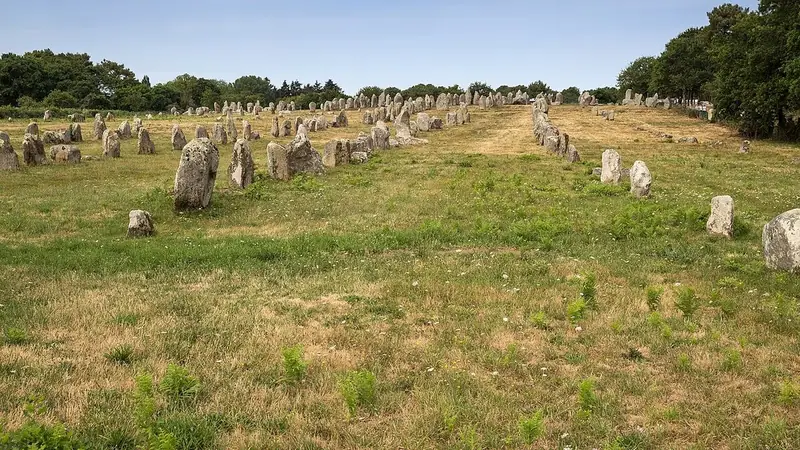 Neolithic10 stops · c. 5000 – 2300 BCE (megalith building)
Carnac Megaliths audio guide
Thousands of standing stones in rows, giant mounds and decorated tombs: the alignments of Carnac, the broken menhir of Locmariaquer and the carved cairn of Gavrinis.
 Gothic8 stops · 12th–13th century CE
Chartres Cathedral audio guide
Step through the Royal Portal into a Gothic cathedral rebuilt after the fire of 1194, with its labyrinth and the deep Chartres blue of its glass.
 Renaissance8 stops · from 1519 CE
Château de Chambord audio guide
Climb the double-helix staircase of François I’s great hunting château to roof terraces crowded with chimneys and turrets, above a vast walled forest park.
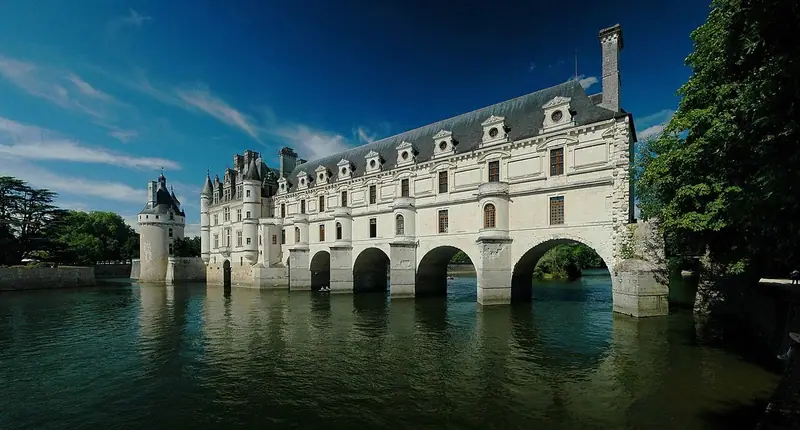 Renaissance8 stops · 1513–1521 CE
Château de Chenonceau audio guide
Cross the River Cher on the long gallery of the château built under Katherine Briçonnet’s eye and later home to Diane de Poitiers.
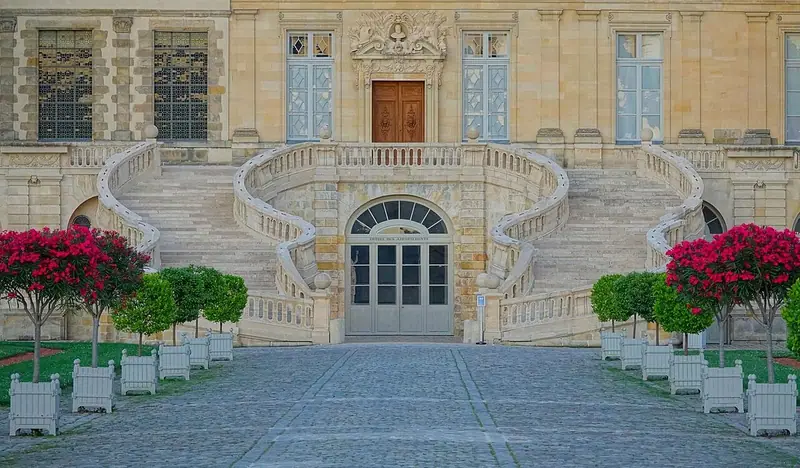 Renaissance8 stops · from 1528 CE
Château de Fontainebleau audio guide
From the Courtyard of Farewells through François I’s Renaissance gallery to the throne room and Napoleon’s apartments.
Every guide, in every country
Pont du Gard and every other guide we publish, including future ones. One payment, no subscription.