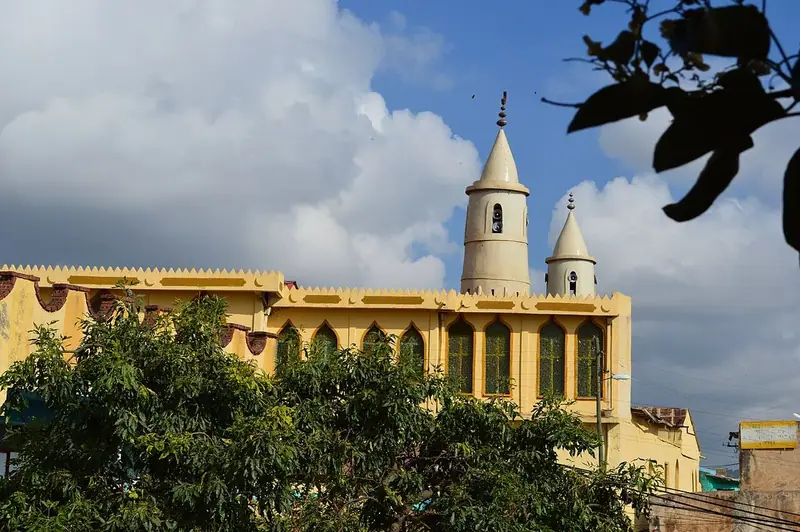
Before you start
Harar, on a hilltop in eastern Ethiopia, is an ancient walled city of narrow lanes, whitewashed houses, mosques and shrines, long known as the City of Saints. For centuries it was a great centre of trade and Islamic learning, linking the Ethiopian highlands with the ports of the Gulf of Aden and the Arabian Peninsula. Its old walled town, the Jugol, has been a World Heritage Site since 2006, and UNESCO counts eighty-two mosques and one hundred and two shrines in and around it. This guide enters by the Harar Gate, explores the lanes of the old town, and ends with the famous hyena men. Dress modestly, and ask before photographing people, especially women and worshippers.
Use it as a self-guided tour of Harar: 8 stops in visit order, each played when you’re ready, at your own pace.
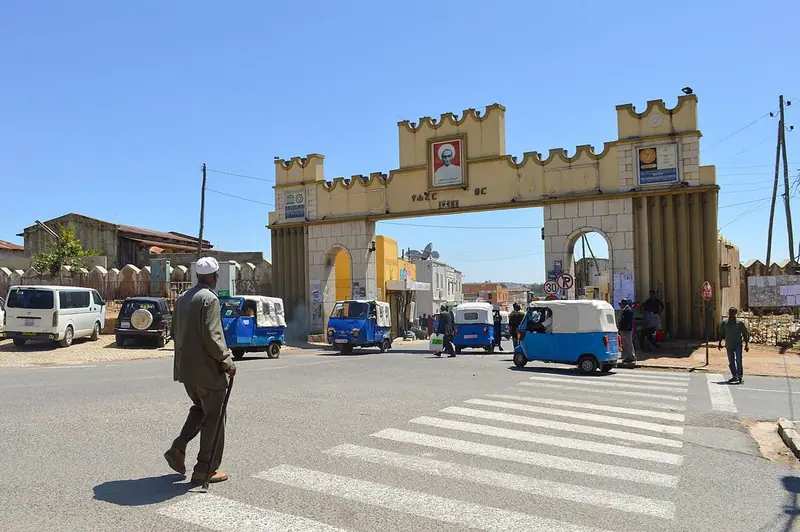 Free preview · Stop 1
The Harar Gate
Begin at the Harar Gate, a busy entrance to the old walled city, known as the Jugol. Look at its battlemented arches, with the traffic of small blue three-wheeled taxis passing beneath. This gate is not one of the original gates; it was added after the conquest of Harar by Menelik II in 1887. The walls themselves were built in the sixteenth century by Emir Nur ibn Mujahid, to protect the city from attack, and were later raised higher during the Egyptian occupation. Notice the stone walls on either side. The wall originally had five gates, each with its own name, each leading to one of the five historic quarters of the city. The old town covers about sixty hectares, and is packed with houses, lanes and courtyards. Walk through the gate, and follow the street into the old town.
Photo: Francisco Anzola · CC BY 3.0 · Wikimedia Commons
What to see at Harar: 8 stops, in visit order
- 01
 The Harar GateInto the Walled CityFree preview
- 02
 Feres MagalaThe Heart of the CityIn the guide
- 03
 The Tomb of Emir NurThe Builder of the WallsIn the guide
- 04
 The Jami MosqueThe Great MosqueIn the guide
- 05
 Rimbaud’s HouseA Poet in HararIn the guide
- 06
 The MarketCoffee and SpicesIn the guide
- 07
 A Harari HouseInside a Gey GarIn the guide
- 08
 The Hyena MenA Unique TraditionIn the guide
Site map of Harar
History of Harar
According to tradition, Harar was founded in the thirteenth century by the saint Abadir Umar ar-Rida, who came from Arabia with other holy men, although historians suggest other dates. In 1520 it became the capital of the Adal Sultanate, and from here Imam Ahmad ibn Ibrahim al-Ghazi launched campaigns that devastated much of Christian Ethiopia. Later it was ruled by its own emirs, then by Egypt from 1875 to 1885, before it was conquered by Emperor Menelik II in 1887. The Harari people have their own language and traditions, and Harar is famous for its coffee, its basketry and its distinctive houses.
Harar guide: questions
How many stops does the Harar guide have?
8 stops, in visit order: 1. The Harar Gate; 2. Feres Magala; 3. The Tomb of Emir Nur; 4. The Jami Mosque; 5. Rimbaud’s House; 6. The Market; 7. A Harari House; 8. The Hyena Men.
Can I do a self-guided tour of Harar with this guide?
Yes. The guide is made for a self-guided tour: 8 stops in visit order, each with a photo, a story and a voice, so you can explore Harar at your own pace, without joining a group. Download it before you go and it works offline.
How long is each guide?
The 8 stops add up to about 6 minutes of listening in total. You play each stop when you’re ready, so you can go at your own pace.
Does the guide work offline?
Yes, once it’s downloaded. The guide is a single self-contained web page (about 7.0 MB) with the photos, text and audio built in. Download it to your phone before you go (Wi-Fi is best); after that it opens in any modern browser on iPhone or Android, with no app, account or mobile signal needed.
Does it use GPS or need my location?
No. The guide doesn’t use GPS and doesn’t know where you are: you play each stop when you reach it. It works on iPhone and Android in any modern browser, and it’s in English.
What’s included?
One self-contained HTML guide: 8 stops in visit order, each with a photo, text and a voice, plus the story of who built the site.
Who built Harar?
According to tradition, Harar was founded in the thirteenth century by the saint Abadir Umar ar-Rida, who came from Arabia with other holy men, although historians suggest other dates. In 1520 it became the capital of the Adal Sultanate, and from here Imam Ahmad ibn Ibrahim al-Ghazi launched campaigns that devastated much of Christian Ethiopia.
Where is Harar?
Harar, on a hilltop in eastern Ethiopia, is an ancient walled city of narrow lanes, whitewashed houses, mosques and shrines, long known as the City of Saints.
Is there a free audio guide to Harar?
The first stop, The Harar Gate, is free to read and hear on this page, so you can try the Harar audio tour before you buy. The full guide, with all 8 stops, is a one-off purchase: download it once and it’s yours to keep, working offline.
Is the Harar guide worth it?
If you’d like to know what you’re looking at, yes. For $10 you get 8 stops in visit order, each with a photo, a short history and a voice you play when you’re ready, plus a site map of the stops, and about 6 minutes of listening in all. It’s short on purpose, so you spend your time looking, not listening. It’s yours to keep, works offline and needs no app. The first stop is free on this page, so you can try it before you buy. If you’d like hours of detail, a guided tour will go deeper.
Audio guide or guided tour?
It depends how you like to visit. This guide lets you explore Harar at your own pace, at any time, for a one-off price. A guided tour gives you a live expert you can ask questions, but at fixed times and usually for a higher price. Many people use both: a tour for the big picture, and the guide to read beforehand or to revisit the stops in their own time.
Is this the official Harar guide?
No. It’s an independent guide by The Historian Guide, not affiliated with or endorsed by the operator of Harar. For tickets and opening hours, check the official site operator before you go.
Does the guide include entry tickets or opening hours?
No. The guide is a digital companion only. Admission to Harar is separate, so check the official site operator for current tickets and opening hours before you go.
- Stop 1 · The Harar Gate: Francisco Anzola · CC BY 3.0 · Wikimedia Commons · resized
- Stop 2 · Feres Magala: Sailko · CC BY 3.0 · Wikimedia Commons · resized
- Stop 3 · The Tomb of Emir Nur: Sailko · CC BY 3.0 · Wikimedia Commons · resized
- Stop 4 · The Jami Mosque (also the cover): Bikoadem · CC BY-SA 4.0 · Wikimedia Commons · resized
- Stop 5 · Rimbaud’s House: Sailko · CC BY 3.0 · Wikimedia Commons · resized
- Stop 6 · The Market: A. Davey from Where I Live Now: Pacific Northwest · CC BY 2.0 · Wikimedia Commons · resized
- Stop 7 · A Harari House: A. Davey from Where I Live Now: Pacific Northwest · CC BY 2.0 · Wikimedia Commons · resized
- Stop 8 · The Hyena Men: Rod Waddington from Kergunyah, Australia · CC BY-SA 2.0 · Wikimedia Commons · resized


All photographs from Wikimedia Commons under the licences shown.
More guides in Ethiopia
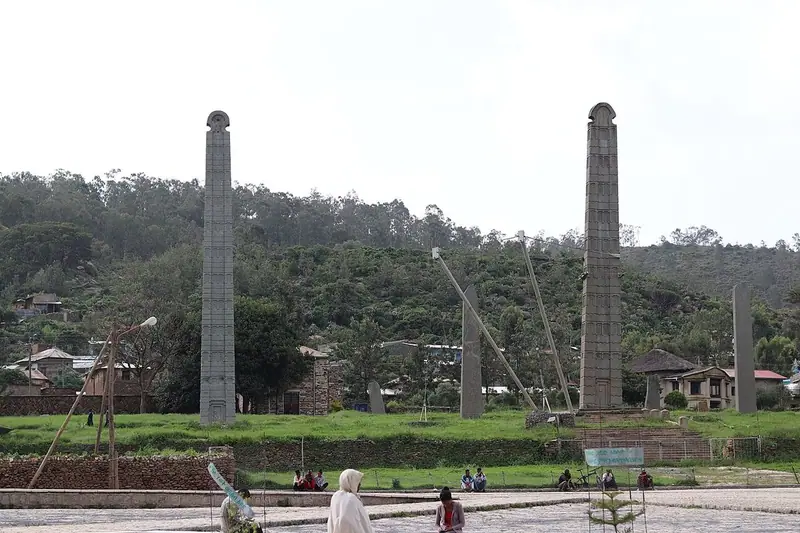 Aksumite8 stops · 1st–7th century CE
Aksum audio guide
The giant carved stelae of Aksum, capital of an ancient kingdom that traded with Rome, Arabia and India, and the Church of Saint Mary of Zion.
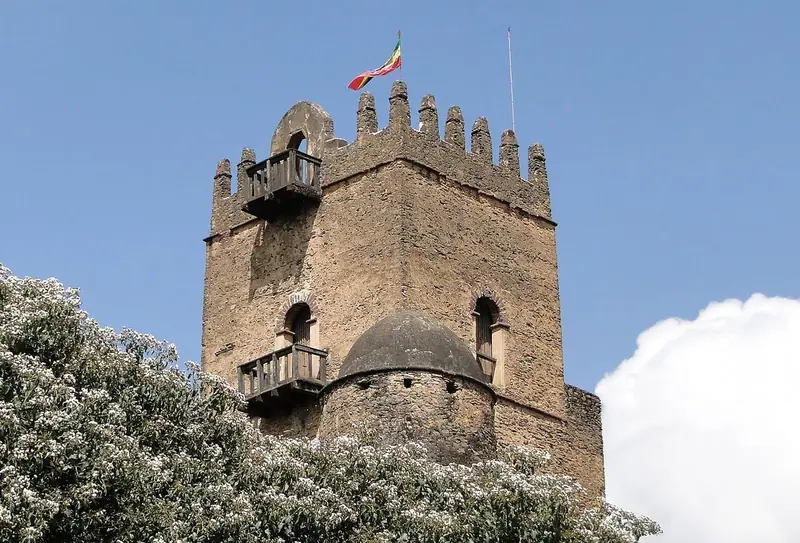 Solomonic Ethiopia8 stops · from 1636 CE
Gondar audio guide
The battlemented castles of Fasil Ghebbi, royal enclosure of Ethiopia’s emperors, and the bath of Fasilides with its painted church.
 Zagwe8 stops · late 12th – early 13th century CE
Lalibela audio guide
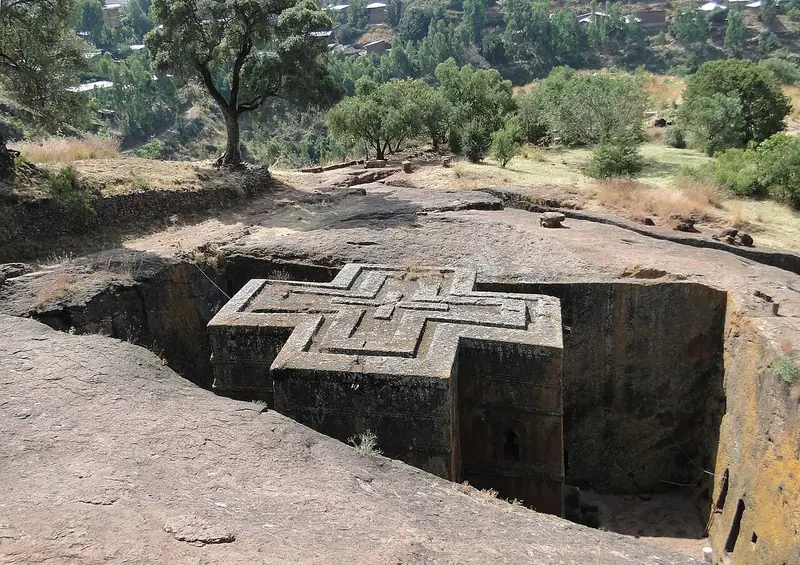
Descend into trenches cut in the living rock to the medieval churches of Lalibela, still a working place of daily prayer and pilgrimage.
Every guide, in every country
Harar and every other guide we publish, including future ones. One payment, no subscription.