Before you start
Kadriorg is a palace and park on the eastern side of Tallinn, about two kilometres from the Old Town and close to the shore of the Baltic Sea. Its name, in Estonian as in German, means Catherine’s valley, after the wife of the Russian tsar who built it. This guide begins at the Swan Pond, visits the baroque palace Peter the Great built, passes the office of Estonia’s president and the Kumu art museum, calls at the small house where Peter stayed, and ends at the Russalka memorial by the sea. The paths are level and easy. Allow around two hours, or longer if you visit the museums.
Use it as a self-guided tour of Kadriorg: 8 stops in visit order, each played when you’re ready, at your own pace.
 Free preview · Stop 1
The Swan Pond
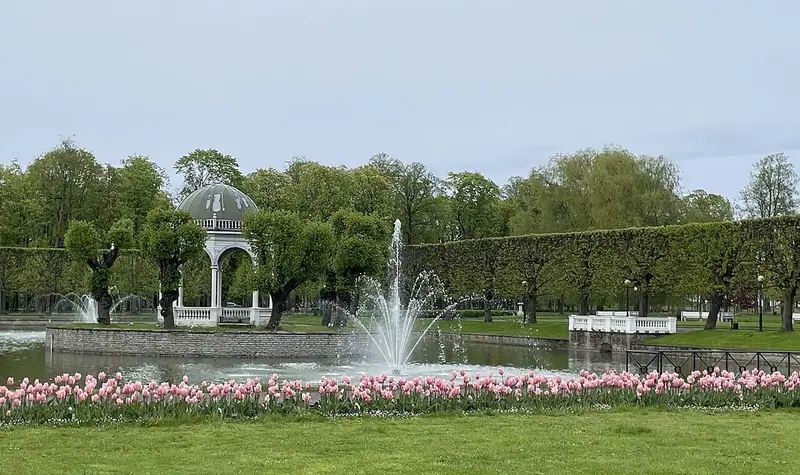
Begin at the Swan Pond, near the western edge of the park, where trams from the city centre stop nearby. This is the park’s best-known stretch of water, and in summer you may see swans gliding past, with a small pavilion on an island in the middle. Pause here and look east along the avenues of trees. The park covers about seventy hectares, and its history began in 1718, when Peter the Great ordered a new residence to be laid out on this land. In his time, much of it was formal garden, with straight avenues, fountains and pools in the fashion of royal parks across Europe. Over the centuries it grew wilder and more natural, and today it is one of Tallinn’s favourite places for a walk, used by families, runners and visitors throughout the year.
Photo: Veterine · CC BY-SA 4.0 · Wikimedia Commons
What to see at Kadriorg: 8 stops, in visit order
- 01
 The Swan PondGateway to the parkFree preview
- 02
 Kadriorg PalaceCatherine’s valleyIn the guide
- 03
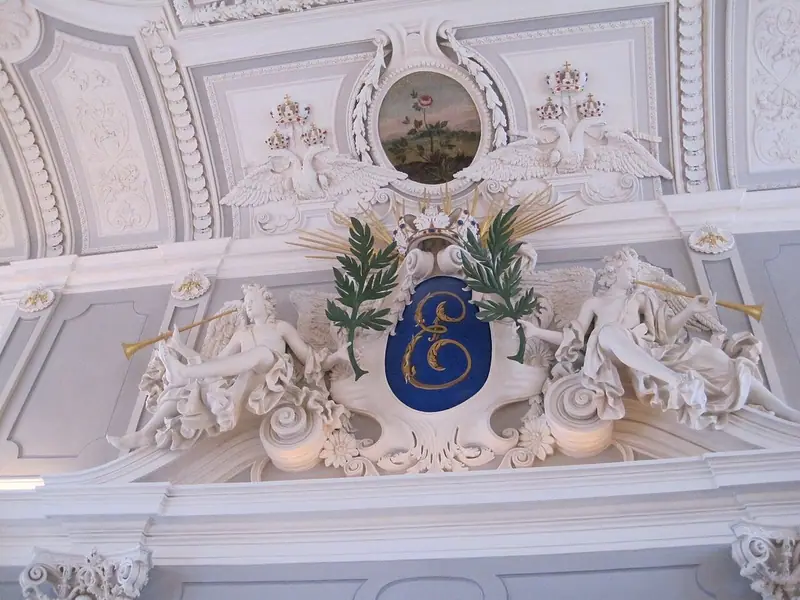
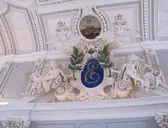 The Great HallStucco and initialsIn the guide
- 04
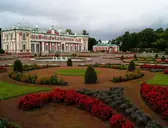 The Flower GardenFountains behind the palaceIn the guide
- 05
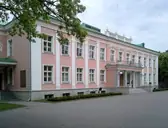 The President’s OfficeA palace for a republicIn the guide
- 06
 KumuArt set into the hillIn the guide
- 07
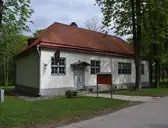 Peter the Great’s HouseA modest beginningIn the guide
- 08
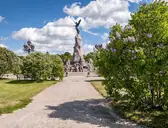 The Russalka MemorialAn angel facing the seaIn the guide
Site map of Kadriorg
History of Kadriorg
Kadriorg was created by Peter the Great, the Russian tsar, after his army took Tallinn, then called Reval, from Sweden in 1710 during the Great Northern War. Estonia remained part of the Russian Empire for two centuries, and Russian governors lived in the palace for much of that time. After Estonia won its independence in 1918, the palace became state property, first an art museum and then the residence of the head of state. The Soviet occupation that followed the Second World War left it neglected. After independence was restored in 1991, it was repaired, and it reopened to the public in 2000.
Kadriorg guide: questions
How many stops does the Kadriorg guide have?
8 stops, in visit order: 1. The Swan Pond; 2. Kadriorg Palace; 3. The Great Hall; 4. The Flower Garden; 5. The President’s Office; 6. Kumu; 7. Peter the Great’s House; 8. The Russalka Memorial.
Can I do a self-guided tour of Kadriorg with this guide?
Yes. The guide is made for a self-guided tour: 8 stops in visit order, each with a photo, a story and a voice, so you can explore Kadriorg at your own pace, without joining a group. Download it before you go and it works offline.
How long is each guide?
The 8 stops add up to about 6 minutes of listening in total. You play each stop when you’re ready, so you can go at your own pace.
Does the guide work offline?
Yes, once it’s downloaded. The guide is a single self-contained web page (about 7.2 MB) with the photos, text and audio built in. Download it to your phone before you go (Wi-Fi is best); after that it opens in any modern browser on iPhone or Android, with no app, account or mobile signal needed.
Does it use GPS or need my location?
No. The guide doesn’t use GPS and doesn’t know where you are: you play each stop when you reach it. It works on iPhone and Android in any modern browser, and it’s in English.
What’s included?
One self-contained HTML guide: 8 stops in visit order, each with a photo, text and a voice, plus the story of who built the site.
Who built Kadriorg?
Kadriorg was created by Peter the Great, the Russian tsar, after his army took Tallinn, then called Reval, from Sweden in 1710 during the Great Northern War. Estonia remained part of the Russian Empire for two centuries, and Russian governors lived in the palace for much of that time.
Where is Kadriorg?
Kadriorg is a palace and park on the eastern side of Tallinn, about two kilometres from the Old Town and close to the shore of the Baltic Sea.
Is there a free audio guide to Kadriorg?
The first stop, The Swan Pond, is free to read and hear on this page, so you can try the Kadriorg audio tour before you buy. The full guide, with all 8 stops, is a one-off purchase: download it once and it’s yours to keep, working offline.
Is the Kadriorg guide worth it?
If you’d like to know what you’re looking at, yes. For $10 you get 8 stops in visit order, each with a photo, a short history and a voice you play when you’re ready, plus a site map of the stops, and about 6 minutes of listening in all. It’s short on purpose, so you spend your time looking, not listening. It’s yours to keep, works offline and needs no app. The first stop is free on this page, so you can try it before you buy. If you’d like hours of detail, a guided tour will go deeper.
Audio guide or guided tour?
It depends how you like to visit. This guide lets you explore Kadriorg at your own pace, at any time, for a one-off price. A guided tour gives you a live expert you can ask questions, but at fixed times and usually for a higher price. Many people use both: a tour for the big picture, and the guide to read beforehand or to revisit the stops in their own time.
Is this the official Kadriorg guide?
No. It’s an independent guide by The Historian Guide, not affiliated with or endorsed by the operator of Kadriorg. For tickets and opening hours, check the official site operator before you go.
Does the guide include entry tickets or opening hours?
No. The guide is a digital companion only. Admission to Kadriorg is separate, so check the official site operator for current tickets and opening hours before you go.
- Stop 1 · The Swan Pond: Veterine · CC BY-SA 4.0 · Wikimedia Commons · resized
- Stop 2 · Kadriorg Palace: Suicasmo · CC BY-SA 4.0 · Wikimedia Commons · resized
- Stop 3 · The Great Hall (also the cover): Dzozeppe · CC BY-SA 3.0 ee · Wikimedia Commons · resized
- Stop 4 · The Flower Garden: Guillaume Speurt · CC BY-SA 2.0 · Wikimedia Commons · resized
- Stop 5 · The President’s Office: Santeri Viinamäki · CC BY 4.0 · Wikimedia Commons · resized
- Stop 6 · Kumu: FrDr · CC BY-SA 4.0 · Wikimedia Commons · resized
- Stop 7 · Peter the Great’s House: Erko · CC BY-SA 4.0 · Wikimedia Commons · resized
- Stop 8 · The Russalka Memorial: Aleksandr Abrosimov · CC BY-SA 4.0 · Wikimedia Commons · resized


All photographs from Wikimedia Commons under the licences shown.
More guides in Estonia
 Medieval9 stops · 13th–16th century
Tallinn Old Town audio guide
Enter by the Viru Gate, cross Town Hall Square and climb from the merchants’ Lower Town up to Toompea and the Kohtuotsa viewpoint.
 Imperial Russia8 stops · Imperial Russia
The Catherine Palace audio guide
Rastrelli’s golden state rooms and the recreated Amber Room, then Charles Cameron’s classical rooms and the park.
 Imperial Russia8 stops · 1750s–1917 CE
The Hermitage audio guide
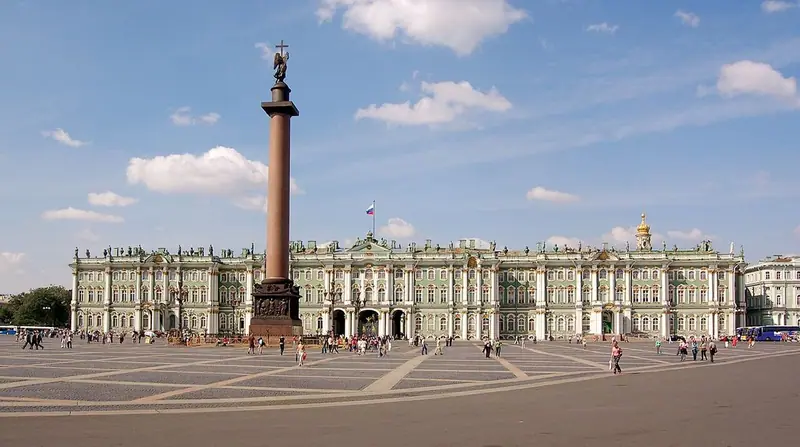
Climb the Jordan Staircase into the Winter Palace of the Russian emperors, to the Malachite Room, the Leonardo Room and Rembrandt.
Every guide, in every country
Kadriorg and every other guide we publish, including future ones. One payment, no subscription.