
Before you start
The Temple of Heaven, in the south of central Beijing, is where the emperors of China came to offer sacrifices to Heaven and to pray for good harvests. Its buildings stand in a vast park of old cypress trees, enclosed by a double wall, and are laid out along a north–south axis. Their round forms, blue roofs and numbers of steps, columns and terraces were all designed to reflect beliefs about Heaven and its relationship with the earth. UNESCO calls it the most complete imperial sacrificial complex in China, and a masterpiece of architecture and landscape design. It has been a World Heritage Site since 1998. Today the park is also a favourite gathering place for local people, who come to exercise, dance, sing and play games. This guide begins at the Circular Mound Altar in the south and heads north to the Hall of Prayer for Good Harvests, ending at the Hall of Abstinence to the west.
Use it as a self-guided tour of the Temple of Heaven: 7 stops in visit order, each played when you’re ready, at your own pace.
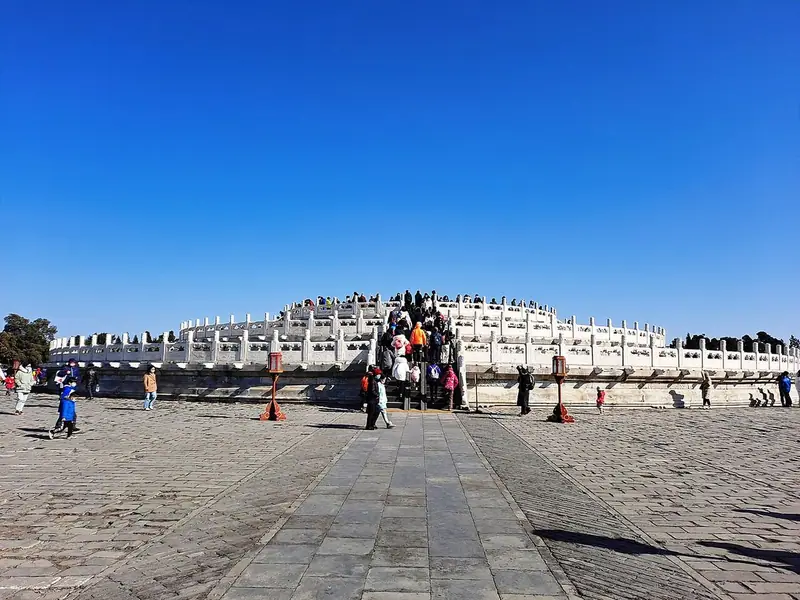 Free preview · Stop 1
Circular Mound Altar
Begin at the Circular Mound Altar, near the southern gate. It is an open platform of white marble, built in three circular tiers, with no building on top: here the emperor worshipped Heaven directly beneath the open sky, at dawn on the winter solstice. The altar was first built in 1530 and rebuilt in the eighteenth century. Its design is based on the number nine, the highest odd number, associated with Heaven and the emperor. Count the stones in the rings of the top level: they increase in multiples of nine outwards from the centre. Notice that the altar is surrounded by a round inner wall and a square outer wall, representing the traditional belief that Heaven is round and the earth is square. Climb to the top and stand on the central round stone, the Heart of Heaven, where the emperor prayed.
Photo: Dingding · CC BY-SA 4.0 · Wikimedia Commons
What to see at the Temple of Heaven: 7 stops, in visit order
- 01
 Circular Mound AltarThe altar under the skyFree preview
- 02
 Imperial Vault of HeavenHome of the tabletsIn the guide
- 03
 Echo WallWhispers in a circleIn the guide
- 04
 Vermilion Steps BridgeThe sacred wayIn the guide
- 05
 Hall of Prayer for Good HarvestsThe great round hallIn the guide
- 06
 Long CorridorLife in the parkIn the guide
- 07
 Hall of AbstinenceWhere the emperor fastedIn the guide
Site map of the Temple of Heaven
History of the Temple of Heaven
The temple was built by the Ming dynasty, which ruled China from 1368 to 1644, and was rebuilt and enlarged by the Qing dynasty, which ruled from 1644 to 1912. The Yongle Emperor, who moved the Ming capital to Beijing, completed the first Altar of Heaven and Earth here in 1420, together with the Forbidden City. In 1530 the Jiajing Emperor decided to worship Heaven and Earth separately, building the Circular Mound Altar, and in 1534 the complex was renamed the Temple of Heaven. After the Manchus founded the Qing dynasty in 1644, its emperors continued the rites, and UNESCO records that the present layout was formed by 1749, after reconstruction by the Qing. The emperor, as Son of Heaven, was the link between Heaven and humankind. The imperial ceremonies ended with the fall of the Qing in 1912, and the temple opened as a public park in 1918.
Temple of Heaven guide: questions
How many stops does the Temple of Heaven guide have?
7 stops, in visit order: 1. Circular Mound Altar; 2. Imperial Vault of Heaven; 3. Echo Wall; 4. Vermilion Steps Bridge; 5. Hall of Prayer for Good Harvests; 6. Long Corridor; 7. Hall of Abstinence.
Can I do a self-guided tour of the Temple of Heaven with this guide?
Yes. The guide is made for a self-guided tour: 7 stops in visit order, each with a photo, a story and a voice, so you can explore the Temple of Heaven at your own pace, without joining a group. Download it before you go and it works offline.
How long is each guide?
The 7 stops add up to about 7 minutes of listening in total. You play each stop when you’re ready, so you can go at your own pace.
Does the guide work offline?
Yes, once it’s downloaded. The guide is a single self-contained web page (about 7.2 MB) with the photos, text and audio built in. Download it to your phone before you go (Wi-Fi is best); after that it opens in any modern browser on iPhone or Android, with no app, account or mobile signal needed.
Does it use GPS or need my location?
No. The guide doesn’t use GPS and doesn’t know where you are: you play each stop when you reach it. It works on iPhone and Android in any modern browser, and it’s in English.
What’s included?
One self-contained HTML guide: 7 stops in visit order, each with a photo, text and a voice, plus the story of who built the site.
Who built the Temple of Heaven?
The temple was built by the Ming dynasty, which ruled China from 1368 to 1644, and was rebuilt and enlarged by the Qing dynasty, which ruled from 1644 to 1912. The Yongle Emperor, who moved the Ming capital to Beijing, completed the first Altar of Heaven and Earth here in 1420, together with the Forbidden City.
Where is the Temple of Heaven?
The Temple of Heaven, in the south of central Beijing, is where the emperors of China came to offer sacrifices to Heaven and to pray for good harvests.
Is there a free audio guide to the Temple of Heaven?
The first stop, Circular Mound Altar, is free to read and hear on this page, so you can try the Temple of Heaven audio tour before you buy. The full guide, with all 7 stops, is a one-off purchase: download it once and it’s yours to keep, working offline.
Is the Temple of Heaven guide worth it?
If you’d like to know what you’re looking at, yes. For $10 you get 7 stops in visit order, each with a photo, a short history and a voice you play when you’re ready, plus a site map of the stops, and about 7 minutes of listening in all. It’s short on purpose, so you spend your time looking, not listening. It’s yours to keep, works offline and needs no app. The first stop is free on this page, so you can try it before you buy. If you’d like hours of detail, a guided tour will go deeper.
Audio guide or guided tour?
It depends how you like to visit. This guide lets you explore the Temple of Heaven at your own pace, at any time, for a one-off price. A guided tour gives you a live expert you can ask questions, but at fixed times and usually for a higher price. Many people use both: a tour for the big picture, and the guide to read beforehand or to revisit the stops in their own time.
Is this the official Temple of Heaven guide?
No. It’s an independent guide by The Historian Guide, not affiliated with or endorsed by the operator of the Temple of Heaven. For tickets and opening hours, check the official site operator before you go.
Does the guide include entry tickets or opening hours?
No. The guide is a digital companion only. Admission to the Temple of Heaven is separate, so check the official site operator for current tickets and opening hours before you go.
- Stop 1 · Circular Mound Altar: 钉钉 · CC BY-SA 4.0 · Wikimedia Commons · resized
- Stop 2 · Imperial Vault of Heaven: Daniel Case · CC BY-SA 3.0 · Wikimedia Commons · resized
- Stop 3 · Echo Wall: 钉钉 · CC BY-SA 4.0 · Wikimedia Commons · resized
- Stop 4 · Vermilion Steps Bridge: 钉钉 · CC BY-SA 4.0 · Wikimedia Commons · resized
- Stop 5 · Hall of Prayer for Good Harvests (also the cover): Photo by CEphoto, Uwe Aranas or alternatively © CEphoto, Uwe Aranas · CC BY-SA 3.0 · Wikimedia Commons · resized
- Stop 6 · Long Corridor: Daniel Case · CC BY-SA 3.0 · Wikimedia Commons · resized
- Stop 7 · Hall of Abstinence: Vmenkov · CC BY-SA 3.0 · Wikimedia Commons · resized


All photographs from Wikimedia Commons under the licences shown.
More guides in China
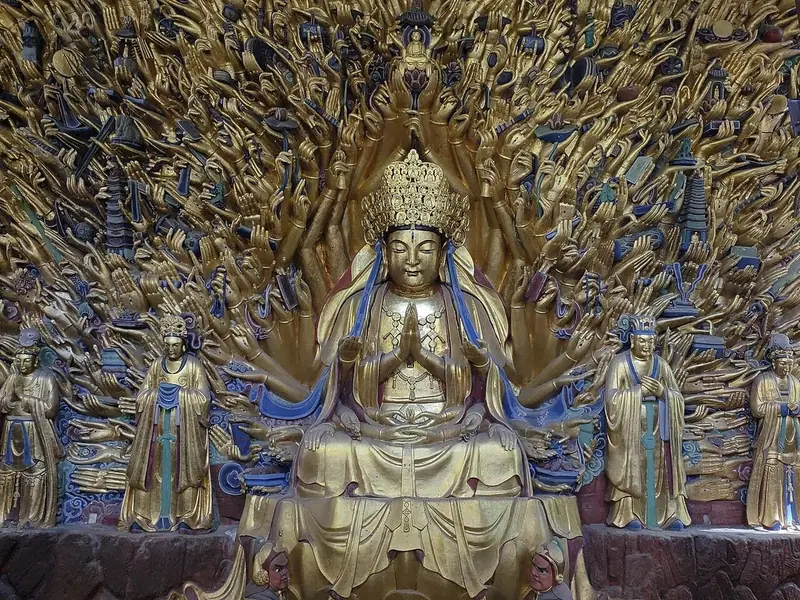 Song9 stops · 892 – c. 1249 CE
Dazu Rock Carvings audio guide
Buddhist cliff carvings of the Tang and Song: the niches of Beishan and the great horseshoe of Baodingshan, with its Wheel of Rebirth, Thousand-Armed Guanyin and Reclining Buddha.
 Ming8 stops · 1406–1912 CE
The Forbidden City audio guide
Follow the central axis of China’s imperial palace through its gates and halls of harmony, roofed in the emperor’s golden-yellow tiles.
 Ming6 stops · 1368–1644 CE
Great Wall at Badaling audio guide
Climb the grey brick battlements and watchtowers of the Great Wall as it rides the mountain crests on either side of the Badaling pass.
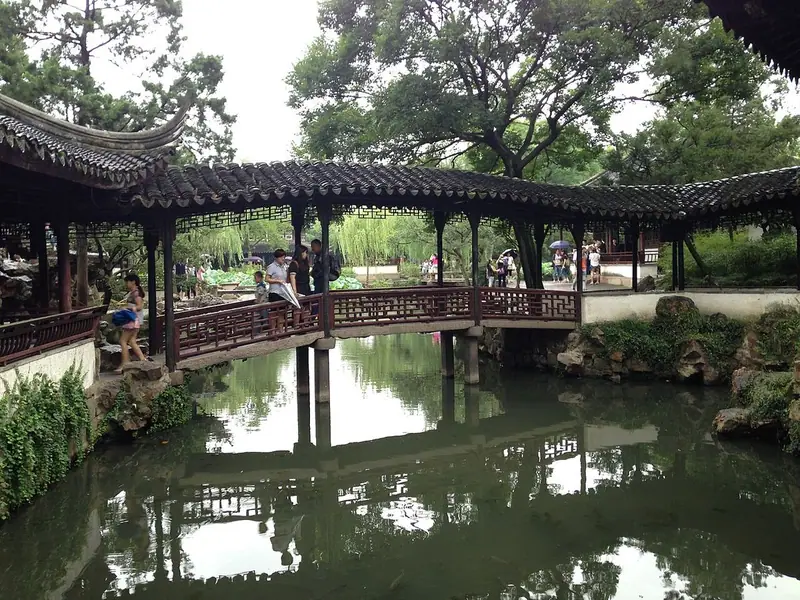 Ming7 stops · from c. 1510 CE
Humble Administrator’s Garden audio guide
Suzhou’s largest classical garden, a landscape in miniature of ponds, islands, bridges and pavilions, each framing a composed view.
 Tang6 stops · early 8th century – 803 CE
Leshan Giant Buddha audio guide
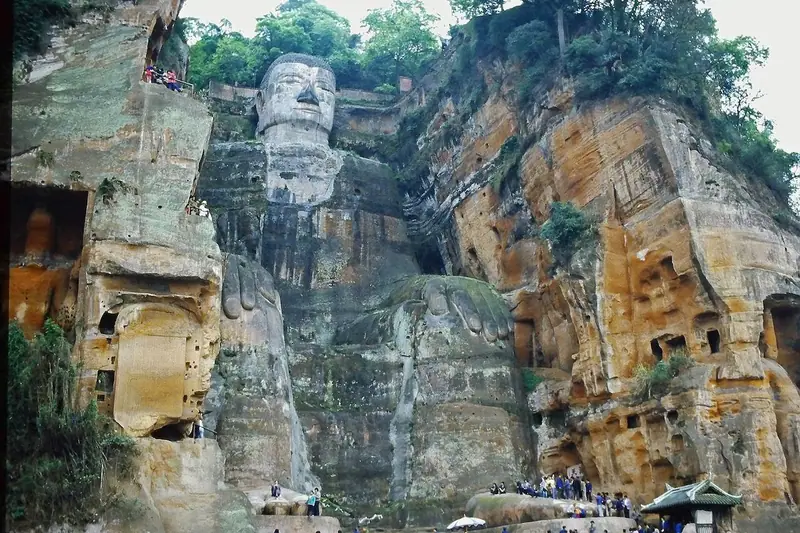
Climb down the Nine-Turn Plank Road beside the 71-metre Giant Buddha, carved into a red sandstone cliff where three rivers meet.
 Tang7 stops · 494–907 CE
Longmen Grottoes audio guide
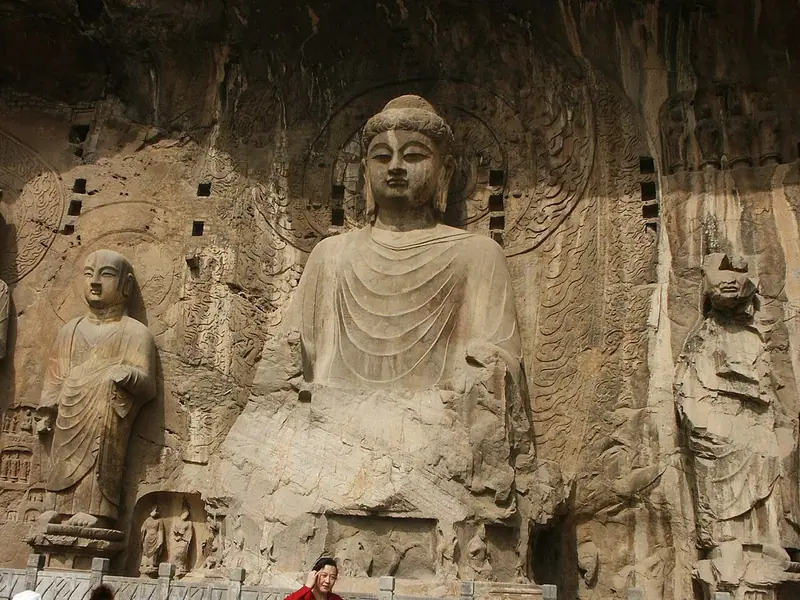
Follow the Yi River past limestone cliffs honeycombed with Buddhist caves and niches to the colossal statues of the Fengxian Temple.
Every guide, in every country
Temple of Heaven and every other guide we publish, including future ones. One payment, no subscription.