Before you start
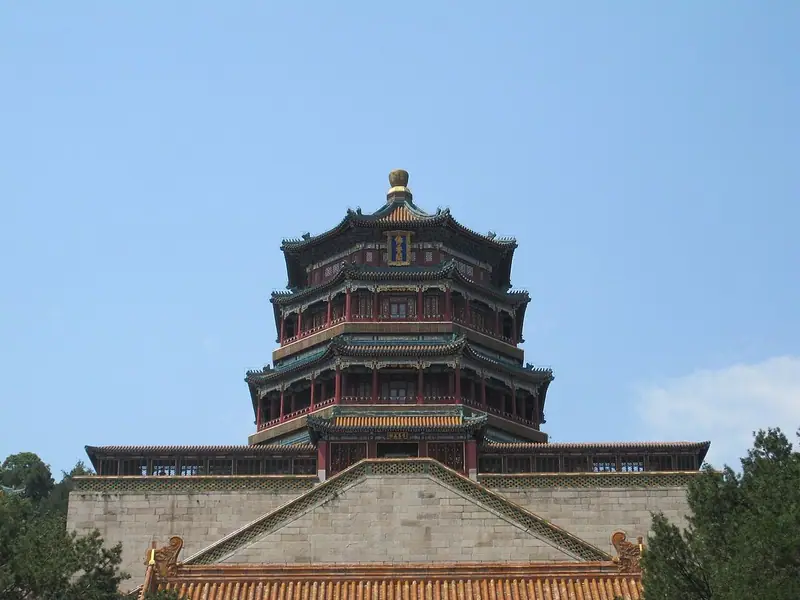
The Summer Palace, in the north-west of Beijing, is the finest surviving imperial garden in China. It spreads around Longevity Hill and the broad waters of Kunming Lake, which together make up most of its area, and is filled with halls, pavilions, temples, bridges and covered walkways, all arranged to frame views of the hill and the water. UNESCO describes it as a masterpiece of Chinese landscape garden design, combining the works of humankind with nature in a harmonious whole, and it has been a World Heritage Site since 1998. It is closely associated with the Empress Dowager Cixi, who made it her favourite residence in the last decades of the Qing dynasty. This guide starts at the East Palace Gate, visits the court and residential halls, and then follows the Long Corridor along the lake to the Marble Boat.
Use it as a self-guided tour of the Summer Palace: 8 stops in visit order, each played when you’re ready, at your own pace.
 Free preview · Stop 1
East Palace Gate
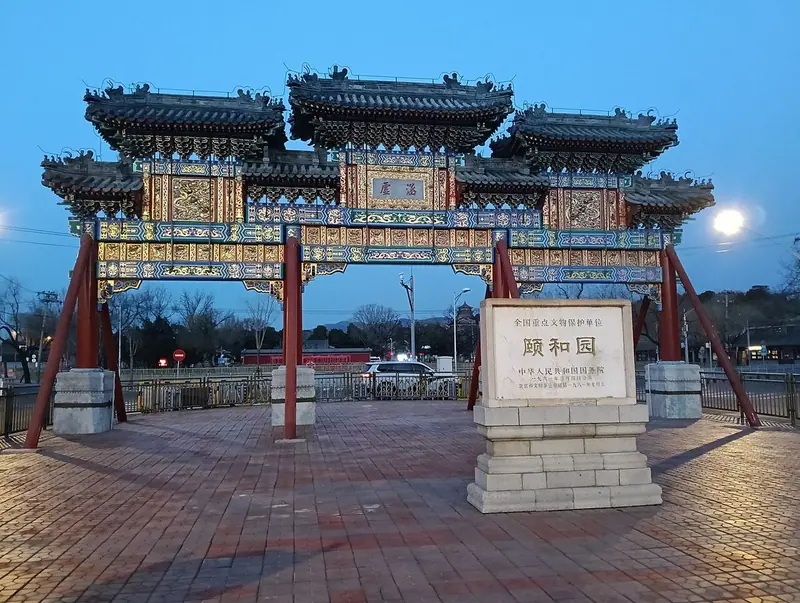
Begin at the tall painted archway in front of the East Palace Gate, the main entrance to the Summer Palace and, as UNESCO notes, the monumental approach to the court area. Then look at the gate itself, with its red doors and painted eaves, and the stone ramp carved with dragons in the centre of the steps, which only the emperor’s sedan chair could pass over. Above the door hangs a board with the name of the garden, Yiheyuan, the Garden of Nurtured Harmony. The name was given when the garden was rebuilt in the 1880s. Inside the gate, the first group of buildings formed the administrative area, where the emperor and the Empress Dowager handled affairs of state when they were in residence. Notice how the courtyards near the entrance are formal and enclosed, a contrast with the open views of the lake that are still hidden from you.
Photo: MiiCii · CC BY-SA 4.0 · Wikimedia Commons
What to see at the Summer Palace: 8 stops, in visit order
- 01
 East Palace GateThe main entranceFree preview
- 02
 Hall of Benevolence and LongevityWhere the court metIn the guide
- 03
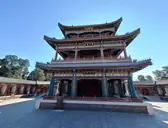 Garden of Virtue and HarmonyThe Great StageIn the guide
- 04
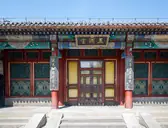 Hall of Jade RipplesThe emperor’s prisonIn the guide
- 05
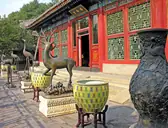 Hall of Happiness in LongevityCixi’s residenceIn the guide
- 06
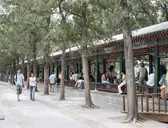 Long CorridorPaintings along the lakeIn the guide
- 07
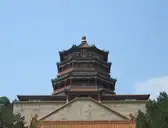 Tower of Buddhist IncenseThe heart of the gardenIn the guide
- 08
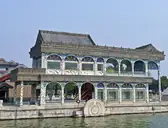 Marble BoatA boat that never sailsIn the guide
Site map of the Summer Palace
History of the Summer Palace
The Summer Palace was created by the Qing dynasty, the last imperial dynasty of China, founded by the Manchus of the north-east. Their leader Nurhaci declared a new state in 1616, renamed Qing in 1636, and in 1644 the Manchus took Beijing and went on to rule all of China until 1912. The Qianlong Emperor laid out the garden between 1750 and 1764 as the Garden of Clear Ripples, using a lake that had served as a reservoir since the Yuan dynasty. UNESCO records that it was destroyed during the Second Opium War, and rebuilt by the Guangxu Emperor for the Empress Dowager Cixi, who dominated the court from 1861 until her death in 1908. It was renamed the Summer Palace. Damaged again in 1900, it was restored, and the Qing dynasty ended with the abdication of the last emperor, Puyi, in 1912.
The full history continues in the guide.
Summer Palace guide: questions
How many stops does the Summer Palace guide have?
8 stops, in visit order: 1. East Palace Gate; 2. Hall of Benevolence and Longevity; 3. Garden of Virtue and Harmony; 4. Hall of Jade Ripples; 5. Hall of Happiness in Longevity; 6. Long Corridor; 7. Tower of Buddhist Incense; 8. Marble Boat.
Can I do a self-guided tour of the Summer Palace with this guide?
Yes. The guide is made for a self-guided tour: 8 stops in visit order, each with a photo, a story and a voice, so you can explore the Summer Palace at your own pace, without joining a group. Download it before you go and it works offline.
How long is each guide?
The 8 stops add up to about 7 minutes of listening in total. You play each stop when you’re ready, so you can go at your own pace.
Does the guide work offline?
Yes, once it’s downloaded. The guide is a single self-contained web page (about 8.3 MB) with the photos, text and audio built in. Download it to your phone before you go (Wi-Fi is best); after that it opens in any modern browser on iPhone or Android, with no app, account or mobile signal needed.
Does it use GPS or need my location?
No. The guide doesn’t use GPS and doesn’t know where you are: you play each stop when you reach it. It works on iPhone and Android in any modern browser, and it’s in English.
What’s included?
One self-contained HTML guide: 8 stops in visit order, each with a photo, text and a voice, plus the story of who built the site.
Who built the Summer Palace?
The Summer Palace was created by the Qing dynasty, the last imperial dynasty of China, founded by the Manchus of the north-east. Their leader Nurhaci declared a new state in 1616, renamed Qing in 1636, and in 1644 the Manchus took Beijing and went on to rule all of China until 1912.
Where is the Summer Palace?
The Summer Palace, in the north-west of Beijing, is the finest surviving imperial garden in China.
Is there a free audio guide to the Summer Palace?
The first stop, East Palace Gate, is free to read and hear on this page, so you can try the Summer Palace audio tour before you buy. The full guide, with all 8 stops, is a one-off purchase: download it once and it’s yours to keep, working offline.
Is the Summer Palace guide worth it?
If you’d like to know what you’re looking at, yes. For $10 you get 8 stops in visit order, each with a photo, a short history and a voice you play when you’re ready, plus a site map of the stops, and about 7 minutes of listening in all. It’s short on purpose, so you spend your time looking, not listening. It’s yours to keep, works offline and needs no app. The first stop is free on this page, so you can try it before you buy. If you’d like hours of detail, a guided tour will go deeper.
Audio guide or guided tour?
It depends how you like to visit. This guide lets you explore the Summer Palace at your own pace, at any time, for a one-off price. A guided tour gives you a live expert you can ask questions, but at fixed times and usually for a higher price. Many people use both: a tour for the big picture, and the guide to read beforehand or to revisit the stops in their own time.
Is this the official Summer Palace guide?
No. It’s an independent guide by The Historian Guide, not affiliated with or endorsed by the operator of the Summer Palace. For tickets and opening hours, check the official site operator before you go.
Does the guide include entry tickets or opening hours?
No. The guide is a digital companion only. Admission to the Summer Palace is separate, so check the official site operator for current tickets and opening hours before you go.
- Stop 1 · East Palace Gate: MiiCii · CC BY-SA 4.0 · Wikimedia Commons · resized
- Stop 2 · Hall of Benevolence and Longevity: Dquai · CC BY-SA 4.0 · Wikimedia Commons · resized
- Stop 3 · Garden of Virtue and Harmony: 钉钉 · CC BY-SA 4.0 · Wikimedia Commons · resized
- Stop 4 · Hall of Jade Ripples: xiquinhosilva · CC BY 2.0 · Wikimedia Commons · resized
- Stop 5 · Hall of Happiness in Longevity: Dennis G. Jarvis · CC BY-SA 2.0 · Wikimedia Commons · resized
- Stop 6 · Long Corridor: Gary Todd from Xinzheng, China · CC0 · Wikimedia Commons · resized
- Stop 7 · Tower of Buddhist Incense (also the cover): Tojan76 · CC BY-SA 3.0 · Wikimedia Commons · resized
- Stop 8 · Marble Boat: Daniel Case · CC BY-SA 3.0 · Wikimedia Commons · resized


All photographs from Wikimedia Commons under the licences shown.
More guides in China
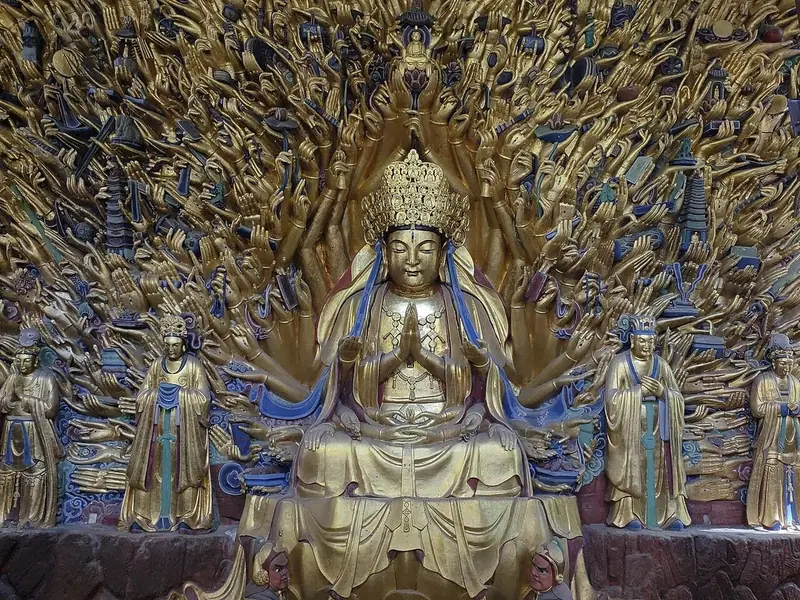 Song9 stops · 892 – c. 1249 CE
Dazu Rock Carvings audio guide
Buddhist cliff carvings of the Tang and Song: the niches of Beishan and the great horseshoe of Baodingshan, with its Wheel of Rebirth, Thousand-Armed Guanyin and Reclining Buddha.
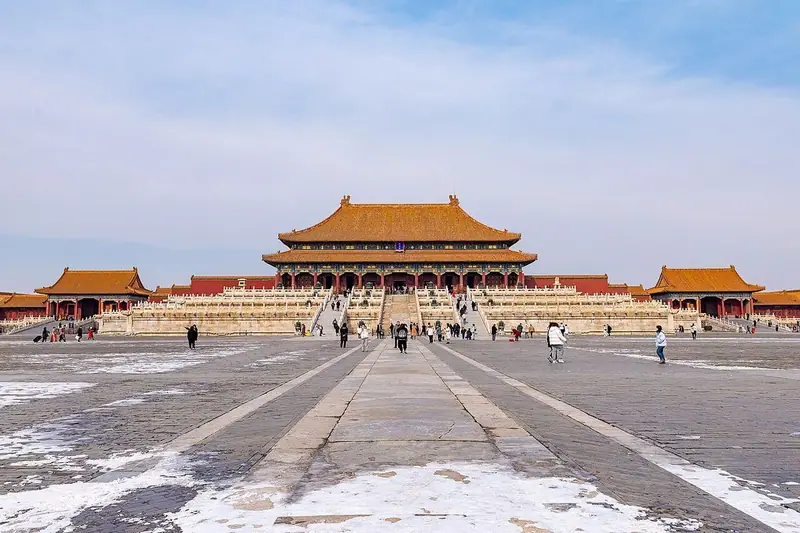 Ming8 stops · 1406–1912 CE
The Forbidden City audio guide
Follow the central axis of China’s imperial palace through its gates and halls of harmony, roofed in the emperor’s golden-yellow tiles.
 Ming6 stops · 1368–1644 CE
Great Wall at Badaling audio guide
Climb the grey brick battlements and watchtowers of the Great Wall as it rides the mountain crests on either side of the Badaling pass.
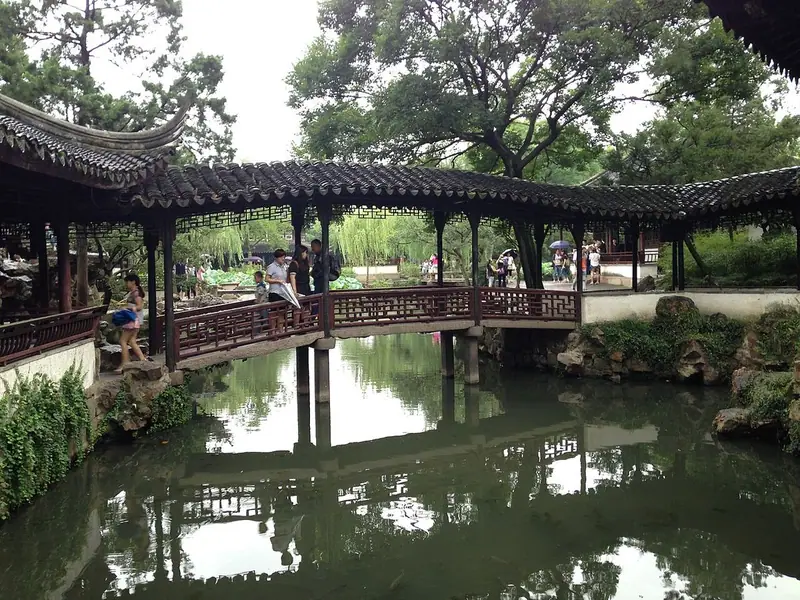 Ming7 stops · from c. 1510 CE
Humble Administrator’s Garden audio guide
Suzhou’s largest classical garden, a landscape in miniature of ponds, islands, bridges and pavilions, each framing a composed view.
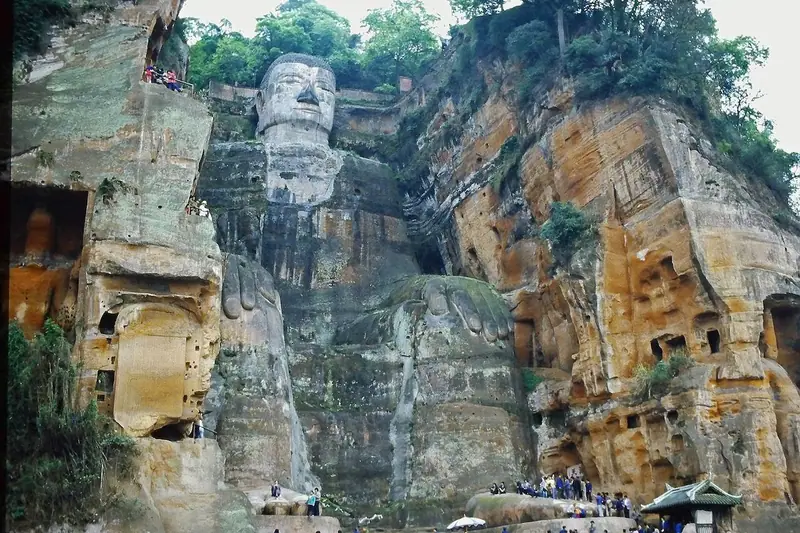 Tang6 stops · early 8th century – 803 CE
Leshan Giant Buddha audio guide
Climb down the Nine-Turn Plank Road beside the 71-metre Giant Buddha, carved into a red sandstone cliff where three rivers meet.
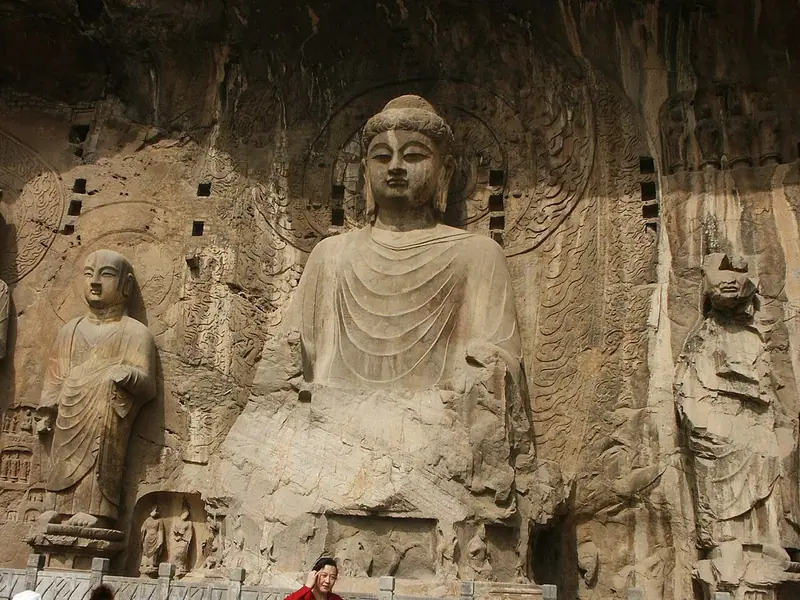 Tang7 stops · 494–907 CE
Longmen Grottoes audio guide
Follow the Yi River past limestone cliffs honeycombed with Buddhist caves and niches to the colossal statues of the Fengxian Temple.
Every guide, in every country
Summer Palace and every other guide we publish, including future ones. One payment, no subscription.