Before you start
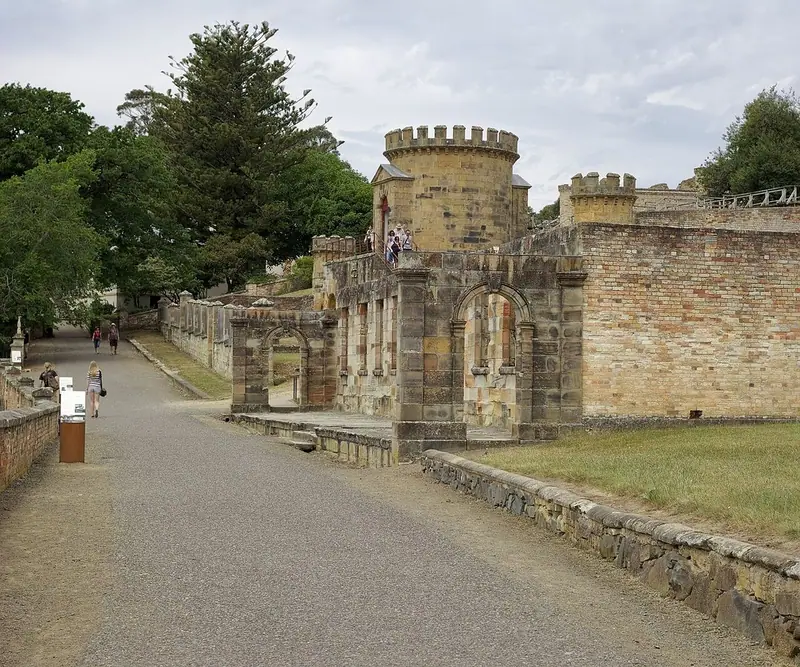
Port Arthur lies on the Tasman Peninsula, about a hundred kilometres south-east of Hobart, in Tasmania. For more than forty years it was one of the harshest penal settlements of the British Empire, and today its sandstone ruins stand in green parkland beside a quiet harbour. It is part of the Australian Convict Sites, inscribed as a UNESCO World Heritage Site in 2010. This guide starts at the great Penitentiary on the waterfront, continues to the church, crosses to the Separate Prison and the Asylum, climbs past the Guard Tower and the Commandant’s House, visits the Memorial Garden, and ends with the view across the water to the Isle of the Dead. Allow most of a day.
Use it as a self-guided tour of Port Arthur Historic Site: 8 stops in visit order, each played when you’re ready, at your own pace.
 Free preview · Stop 1
The Penitentiary
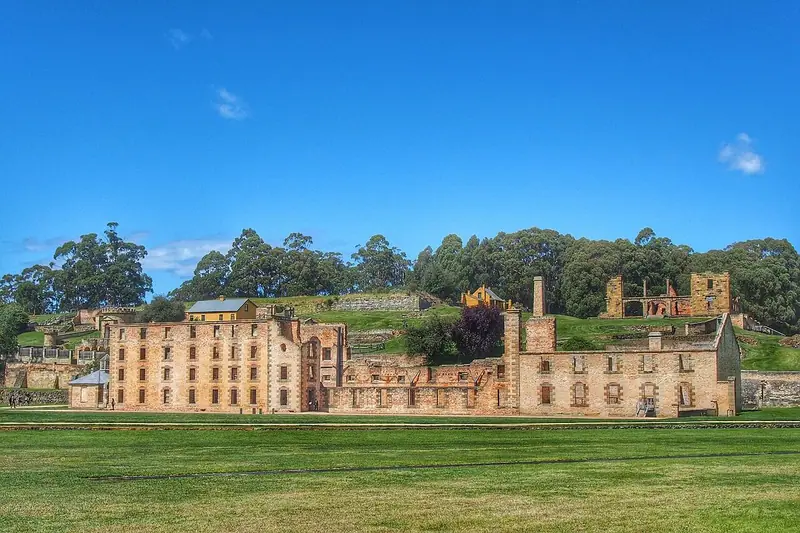
Begin at the Penitentiary, the great four-storey ruin on the waterfront, the most famous sight at Port Arthur. It was not built as a prison. Work began in 1842 on a flour mill and granary, driven by water, but the supply of water was never enough to turn the wheel properly, and the mill only worked in short bursts. When more convicts arrived from other closing stations, including Norfolk Island, the building was converted between 1854 and 1857 into a penitentiary. It held up to about 480 men, the more trusted in dormitories on the upper floor and the rest in small separate cells below. It housed prisoners until the settlement closed in 1877. A fire in 1897 destroyed the floors and roof, leaving only the brick and stone walls and the rows of barred windows you see today.
Photo: Colin Chick · CC BY-SA 4.0 · Wikimedia Commons
What to see at Port Arthur Historic Site: 8 stops, in visit order
- 01
 The PenitentiaryFrom flour mill to prisonFree preview
- 02
 The Convict ChurchA church for all faithsIn the guide
- 03
 The Separate PrisonSilence and isolationIn the guide
- 04
 The AsylumCare for the brokenIn the guide
- 05
 The Guard TowerThe soldiers’ watchIn the guide
- 06
 The Commandant’s HouseThe officers’ worldIn the guide
- 07
 The Memorial GardenRemembering 1996In the guide
- 08
 Harbour and Isle of the DeadGraves and the boys’ prisonIn the guide
Site map of Port Arthur Historic Site
History of Port Arthur Historic Site
The Tasman Peninsula is the Country of the Pydairrerme people, of the Oyster Bay nation of Tasmanian Aboriginal people, who lived here long before the British arrived. Britain transported convicts to Van Diemen’s Land, as Tasmania was then called, from 1803. Port Arthur was founded in 1830 as a timber camp, named after the Lieutenant-Governor, George Arthur, and from 1833 it received repeat offenders from across the colonies. Transportation to Tasmania ended in 1853, and the settlement became a home for ageing and sick convicts before it closed in 1877. Bushfires in the 1890s gutted many buildings. Since 1987 the site has been cared for by the Port Arthur Historic Site Management Authority.
Port Arthur Historic Site guide: questions
How many stops does the Port Arthur Historic Site guide have?
8 stops, in visit order: 1. The Penitentiary; 2. The Convict Church; 3. The Separate Prison; 4. The Asylum; 5. The Guard Tower; 6. The Commandant’s House; 7. The Memorial Garden; 8. Harbour and Isle of the Dead.
Can I do a self-guided tour of Port Arthur Historic Site with this guide?
Yes. The guide is made for a self-guided tour: 8 stops in visit order, each with a photo, a story and a voice, so you can explore Port Arthur Historic Site at your own pace, without joining a group. Download it before you go and it works offline.
How long is each guide?
The 8 stops add up to about 6 minutes of listening in total. You play each stop when you’re ready, so you can go at your own pace.
Does the guide work offline?
Yes, once it’s downloaded. The guide is a single self-contained web page (about 7.8 MB) with the photos, text and audio built in. Download it to your phone before you go (Wi-Fi is best); after that it opens in any modern browser on iPhone or Android, with no app, account or mobile signal needed.
Does it use GPS or need my location?
No. The guide doesn’t use GPS and doesn’t know where you are: you play each stop when you reach it. It works on iPhone and Android in any modern browser, and it’s in English.
What’s included?
One self-contained HTML guide: 8 stops in visit order, each with a photo, text and a voice, plus the story of who built the site.
Who built Port Arthur Historic Site?
The Tasman Peninsula is the Country of the Pydairrerme people, of the Oyster Bay nation of Tasmanian Aboriginal people, who lived here long before the British arrived. Britain transported convicts to Van Diemen’s Land, as Tasmania was then called, from 1803.
Where is Port Arthur Historic Site?
Port Arthur lies on the Tasman Peninsula, about a hundred kilometres south-east of Hobart, in Tasmania.
Is there a free audio guide to Port Arthur Historic Site?
The first stop, The Penitentiary, is free to read and hear on this page, so you can try the Port Arthur Historic Site audio tour before you buy. The full guide, with all 8 stops, is a one-off purchase: download it once and it’s yours to keep, working offline.
Is the Port Arthur Historic Site guide worth it?
If you’d like to know what you’re looking at, yes. For $10 you get 8 stops in visit order, each with a photo, a short history and a voice you play when you’re ready, plus a site map of the stops, and about 6 minutes of listening in all. It’s short on purpose, so you spend your time looking, not listening. It’s yours to keep, works offline and needs no app. The first stop is free on this page, so you can try it before you buy. If you’d like hours of detail, a guided tour will go deeper.
Audio guide or guided tour?
It depends how you like to visit. This guide lets you explore Port Arthur Historic Site at your own pace, at any time, for a one-off price. A guided tour gives you a live expert you can ask questions, but at fixed times and usually for a higher price. Many people use both: a tour for the big picture, and the guide to read beforehand or to revisit the stops in their own time.
Is this the official Port Arthur Historic Site guide?
No. It’s an independent guide by The Historian Guide, not affiliated with or endorsed by the operator of Port Arthur Historic Site. For tickets and opening hours, check the official site operator before you go.
Does the guide include entry tickets or opening hours?
No. The guide is a digital companion only. Admission to Port Arthur Historic Site is separate, so check the official site operator for current tickets and opening hours before you go.
- Stop 1 · The Penitentiary: Colin Chick · CC BY-SA 4.0 · Wikimedia Commons · resized
- Stop 2 · The Convict Church: Jorge Láscar from Australia · CC BY 2.0 · Wikimedia Commons · resized
- Stop 3 · The Separate Prison: Anson Brothers · Public domain · Wikimedia Commons · resized
- Stop 4 · The Asylum: Mdhowe at English Wikipedia · Public domain · Wikimedia Commons · resized
- Stop 5 · The Guard Tower (also the cover): Thennicke · CC BY-SA 4.0 · Wikimedia Commons · resized
- Stop 6 · The Commandant’s House: JERRYE & ROY KLOTZ MD · CC BY-SA 3.0 · Wikimedia Commons · resized
- Stop 7 · The Memorial Garden: Elzbenz · CC BY-SA 4.0 · Wikimedia Commons · resized
- Stop 8 · Harbour and Isle of the Dead: OliverH88 · CC BY-SA 4.0 · Wikimedia Commons · resized


All photographs from Wikimedia Commons under the licences shown.
More guides in Australia
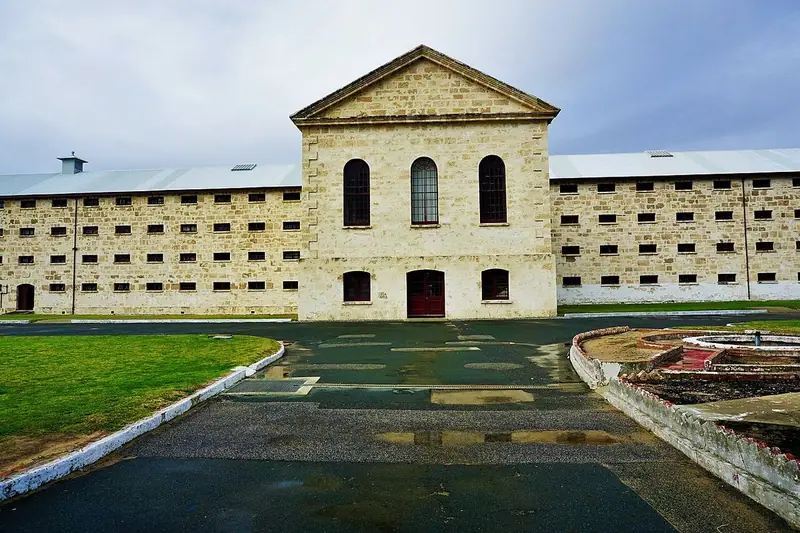 British Colonial7 stops · 1850–1991
Fremantle Prison audio guide
Pass through the gatehouse of the convict-built prison above Fremantle, from the main cell block and the gallows to the tunnels beneath.
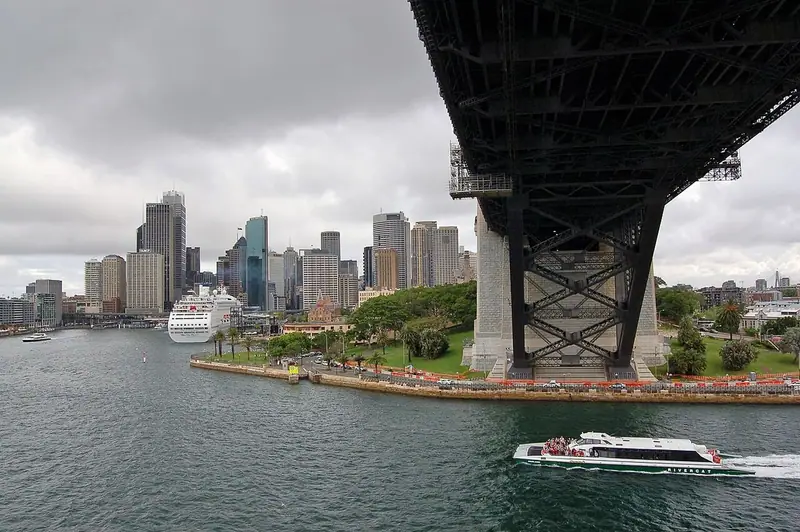 British Colonial7 stops · 1788–1932
The Rocks audio guide
Start at Cadman’s Cottage on Sydney Cove and climb through the Argyle Cut to Observatory Hill, where the colony of New South Wales began.
 British Colonial7 stops · 1822–1965
Chinatown audio guide
The shophouses of Pagoda Street, the Sri Mariamman Temple, the Jamae Mosque and the Buddha Tooth Relic Temple.
Every guide, in every country
Port Arthur Historic Site and every other guide we publish, including future ones. One payment, no subscription.