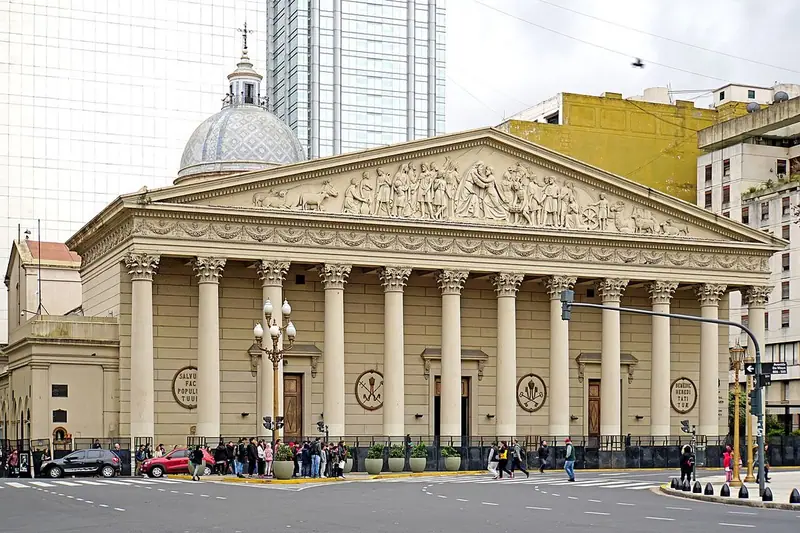
Before you start
The Plaza de Mayo is the historic heart of Buenos Aires, the square where the city was laid out in 1580 and where much of Argentina’s history has been played out, from the revolution of 1810 to the great rallies and protests of the twentieth century. Around it stand the Casa Rosada, the cathedral and the old Cabildo. This guide crosses the square, visits its great buildings, then follows the Avenida de Mayo, the grand boulevard of the turn of the twentieth century, past the Café Tortoni and the Palacio Barolo to the Congress. The route is flat and about one and a half kilometres long; allow around three hours with visits.
Use it as a self-guided tour of Plaza de Mayo: 7 stops in visit order, each played when you’re ready, at your own pace.
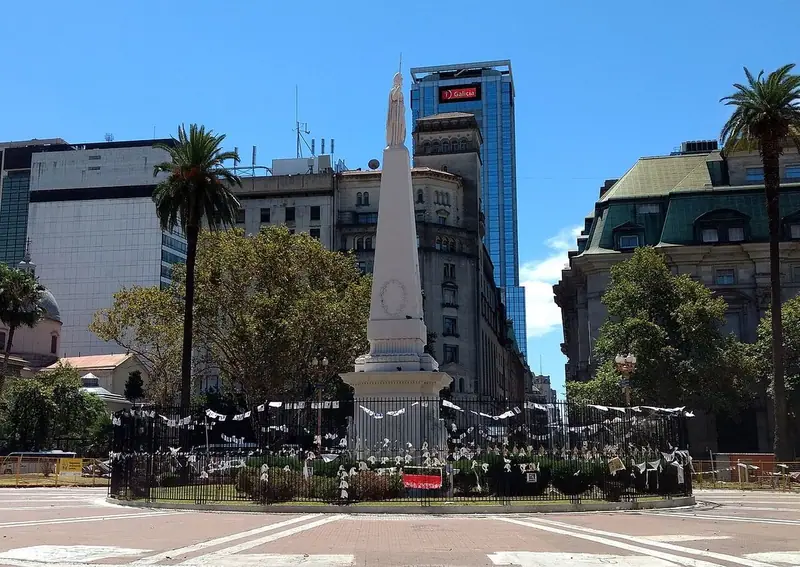 Free preview · Stop 1
Pirámide de Mayo
Begin in the centre of the square at the Pirámide de Mayo, the May Pyramid, a white obelisk crowned by a figure representing Liberty. It was first put up in 1811 to celebrate the first anniversary of the May Revolution, when a local junta replaced the Spanish viceroy, and it is the oldest national monument in the city. It has been rebuilt and refaced over the years and was moved to its present position in 1912. Look at the ground around the pyramid, where white headscarves are painted on the paving. They honour the Mothers of the Plaza de Mayo, who from 1977 walked around the square every week, wearing white headscarves, to demand news of their children, who had disappeared under the military dictatorship. Thousands of people were abducted and killed by the regime between 1976 and 1983, and the Mothers became a symbol of courage.
Photo: Banfield · CC BY-SA 2.5 ar · Wikimedia Commons
What to see at Plaza de Mayo: 7 stops, in visit order
- 01
 Pirámide de MayoThe first monumentFree preview
- 02
 Casa RosadaThe pink houseIn the guide
- 03
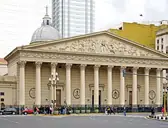 Metropolitan CathedralSan Martín’s tombIn the guide
- 04
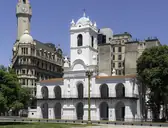 The CabildoWhere the revolution beganIn the guide
- 05
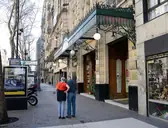 Avenida de MayoA Spanish boulevardIn the guide
- 06
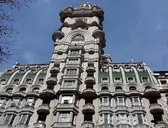 Palacio BaroloDante’s skyscraperIn the guide
- 07
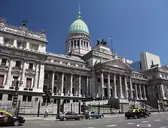 Palace of CongressSeat of the nationIn the guide
Site map of Plaza de Mayo
History of Plaza de Mayo
Before the Spanish arrived, the plains around the Río de la Plata were home to indigenous peoples, including the Querandí. A first Spanish settlement was founded here by Pedro de Mendoza in 1536 but was abandoned a few years later. In 1580 Juan de Garay, arriving from Asunción, founded the city again and marked out its main square. Buenos Aires grew slowly at first, but in 1776 it became the capital of the new Viceroyalty of the Río de la Plata. Spanish rule effectively ended with the May Revolution of 1810, when a local junta took power, and independence was declared in 1816. In the late nineteenth and early twentieth centuries, millions of immigrants, mainly from Italy and Spain, transformed Buenos Aires into one of the great cities of the Americas.
Plaza de Mayo guide: questions
How many stops does the Plaza de Mayo guide have?
7 stops, in visit order: 1. Pirámide de Mayo; 2. Casa Rosada; 3. Metropolitan Cathedral; 4. The Cabildo; 5. Avenida de Mayo; 6. Palacio Barolo; 7. Palace of Congress.
Can I do a self-guided tour of Plaza de Mayo with this guide?
Yes. The guide is made for a self-guided tour: 7 stops in visit order, each with a photo, a story and a voice, so you can explore Plaza de Mayo at your own pace, without joining a group. Download it before you go and it works offline.
How long is each guide?
The 7 stops add up to about 5 minutes of listening in total. You play each stop when you’re ready, so you can go at your own pace.
Does the guide work offline?
Yes, once it’s downloaded. The guide is a single self-contained web page (about 6.9 MB) with the photos, text and audio built in. Download it to your phone before you go (Wi-Fi is best); after that it opens in any modern browser on iPhone or Android, with no app, account or mobile signal needed.
Does it use GPS or need my location?
No. The guide doesn’t use GPS and doesn’t know where you are: you play each stop when you reach it. It works on iPhone and Android in any modern browser, and it’s in English.
What’s included?
One self-contained HTML guide: 7 stops in visit order, each with a photo, text and a voice, plus the story of who built the site.
Who built Plaza de Mayo?
Before the Spanish arrived, the plains around the Río de la Plata were home to indigenous peoples, including the Querandí. A first Spanish settlement was founded here by Pedro de Mendoza in 1536 but was abandoned a few years later.
Where is Plaza de Mayo?
The Plaza de Mayo is the historic heart of Buenos Aires, the square where the city was laid out in 1580 and where much of Argentina’s history has been played out, from the revolution of 1810 to the great rallies and protests of the twentieth century.
Is there a free audio guide to Plaza de Mayo?
The first stop, Pirámide de Mayo, is free to read and hear on this page, so you can try the Plaza de Mayo audio tour before you buy. The full guide, with all 7 stops, is a one-off purchase: download it once and it’s yours to keep, working offline.
Is the Plaza de Mayo guide worth it?
If you’d like to know what you’re looking at, yes. For $10 you get 7 stops in visit order, each with a photo, a short history and a voice you play when you’re ready, plus a site map of the stops, and about 5 minutes of listening in all. It’s short on purpose, so you spend your time looking, not listening. It’s yours to keep, works offline and needs no app. The first stop is free on this page, so you can try it before you buy. If you’d like hours of detail, a guided tour will go deeper.
Audio guide or guided tour?
It depends how you like to visit. This guide lets you explore Plaza de Mayo at your own pace, at any time, for a one-off price. A guided tour gives you a live expert you can ask questions, but at fixed times and usually for a higher price. Many people use both: a tour for the big picture, and the guide to read beforehand or to revisit the stops in their own time.
Is this the official Plaza de Mayo guide?
No. It’s an independent guide by The Historian Guide, not affiliated with or endorsed by the operator of Plaza de Mayo. For tickets and opening hours, check the official site operator before you go.
Does the guide include entry tickets or opening hours?
No. The guide is a digital companion only. Admission to Plaza de Mayo is separate, so check the official site operator for current tickets and opening hours before you go.
- Stop 1 · Pirámide de Mayo: Banfield · CC BY-SA 2.5 ar · Wikimedia Commons · resized
- Stop 2 · Casa Rosada: Lars Curfs · CC BY-SA 3.0 nl · Wikimedia Commons · resized
- Stop 3 · Metropolitan Cathedral (also the cover): Dennis G. Jarvis · CC BY-SA 2.0 · Wikimedia Commons · resized
- Stop 4 · The Cabildo: Fernando · CC BY-SA 4.0 · Wikimedia Commons · resized
- Stop 5 · Avenida de Mayo: Ramon Corvera · CC BY-SA 3.0 · Wikimedia Commons · resized
- Stop 6 · Palacio Barolo: Gustavo Ghisalberti · CC BY-SA 4.0 · Wikimedia Commons · resized
- Stop 7 · Palace of Congress: Liam Quinn from Canada · CC BY-SA 2.0 · Wikimedia Commons · resized


All photographs from Wikimedia Commons under the licences shown.
More guides in Argentina
 Spanish Colonial7 stops · 1599–1767
The Jesuit Block of Córdoba audio guide
Explore a single city block of churches, colleges and cloisters built by the Society of Jesus at the heart of Córdoba.
 Argentine Republic7 stops · 1732–20th century
Recoleta Cemetery audio guide
The marble avenues of Buenos Aires’s city of the dead, and the tombs of presidents, generals and Eva Perón.
 Spanish Colonial7 stops · 1718–1782
Alamo and San Antonio Missions audio guide
From the battle-scarred Alamo to Mission San José and the Espada Aqueduct, the five missions that made San Antonio.
Every guide, in every country
Plaza de Mayo and every other guide we publish, including future ones. One payment, no subscription.